
You've already felt the difference. At the beginning, the energy is strong. Ideas are clear. Then, without warning, the momentum slows. Business motivation wanes. You're still working, but without the same mental intensity.
Understanding why this phenomenon occurs is essential if you want to give your professional momentum a lasting boost. Decreased commitment is not a sign of weakness. It is often a rational signal that something needs to be adjusted.
Work psychology research, particularly that published in the Journal of Applied Psychology and the work of Edward Deci and Richard Ryan on the theory of self-determination, show that motivation is based on specific psychological needs. When these needs are no longer satisfied, energy levels automatically fall.

Business motivation
Business motivation is based on three pillars identified by scientific research. Autonomy. Competence. A sense of belonging. If one of these elements is weakened, your professional commitment is reduced.
You can have an ambitious goal. But if you lose control over your decisions, your motivation drops. You can generate sales. But if you stop making progress, you'll feel stagnant. You can be surrounded by people. But if you feel isolated in your responsibilities, wear and tear sets in.
Analysing your situation with a clear head is the first step in restoring your business motivation.
Cognitive overload
One of the major factors in low energy is mental overload. Neuroscience shows that your attention span is limited. When you're overloaded with decisions, emergencies and interruptions, your brain goes into defensive mode.
You then experience decision fatigue. This phenomenon has been studied by Roy Baumeister, a specialist in self-regulation. The more complex decisions you make, the more your ability to maintain a high level of commitment diminishes.
Your business motivation doesn't disappear for lack of ambition. It erodes because your mental resources are saturated. You need to simplify your processes. Clarify your priorities. Reduce secondary tasks.
Lack of measurable progress
The human brain is sensitive to signals of progress. Research by Harvard professor Teresa Amabile shows that the feeling of daily progress has a strong influence on motivation at work.
If you work without clear indicators, you lose this reference point. You have the impression of acting without tangible results. This impression weakens your business motivation.
So you need to define precise intermediate objectives. Measurable. Realistic. Visible progress feeds the internal dynamic.
The gap between your values and your actions
Over time, your business may evolve. Financial constraints increase. Administrative responsibilities take over. You may stray from your original intention.
This discrepancy creates psychological tension. Researchers refer to this as cognitive dissonance. When your actions no longer correspond to your deepest values, your energy level drops.
Your business motivation is intimately linked to the meaning you give to your activity. Returning to your original intention can restore this alignment.
Decision-making in isolation
Managing often involves structural solitude. You make strategic decisions. You absorb uncertainty. This emotional burden is rarely shared.
Studies on leadership show that prolonged isolation increases the risk of burnout. Without a space for genuine exchange, pressure builds up.
To boost your business motivation, you need to create an environment for dialogue. This can take the form of a mentor, a group of entrepreneurs or a strategic committee.
Strategic confusion
When your vision becomes blurred, your energy diminishes. You multiply projects. You change direction too often. This cognitive instability weakens your commitment.
Research into corporate strategy emphasises the importance of a clear direction. A stable vision reduces internal uncertainty.
Your business motivation depends on the consistency between your objectives and your daily actions. Clarify your central priority. Eliminate scattered initiatives.
How to give your momentum a lasting boost
Revitalising your business motivation is not about looking for external stimulation. It's about rebuilding a stable internal framework.
Step one. Reduce complexity. List your current projects. Identify the ones that really generate value. Delete the others.
Step two. Reinstall weekly progress indicators. Even simple ones. The brain reacts positively to signals of achievement.
Step three. Reconnect with your initial vision. Why did you launch this project? What problem do you want to solve? This clarification reinforces meaning.
Step four. Structure your recovery periods. Research into performance shows that cognitive recovery improves concentration and creativity. Rest is not a luxury. It supports your business motivation.
The importance of emotional discipline
Motivation is not constant. It fluctuates. Successful entrepreneurs do not depend solely on their emotional state.
Behavioural psychology shows that structured habits reduce dependence on instant motivation. If you work according to clear routines, you make progress even when enthusiasm is low.
Your business motivation is then supported by systems. Precise planning. Repeatable processes. Structured meetings.
The role of recognition
Recognition has a strong influence on professional commitment. Studies conducted by Gallup on involvement at work confirm that employees and managers who feel recognised maintain a more stable level of energy.
As a manager, you receive little feedback. Sometimes you need to create your own recognition indicators. Measure your progress. Celebrate the steps you've taken. Even discreetly.
This feeds your business motivation over the long term.
Balancing ambition and realism
Too much ambition can lead to constant pressure. Conversely, targets that are too low can lead to boredom.
The flow theory developed by Mihaly Csikszentmihalyi shows that optimal commitment occurs when the challenge is slightly greater than your current skills. Not too simple. Not unattainable.
Adjusting your objectives is therefore essential to stabilising your business motivation.
Operational conclusion
You don't lose energy by chance. Decreased motivation is the result of identifiable psychological mechanisms. Cognitive overload. Lack of progress. Isolation. Strategic confusion.
Getting your momentum back on track requires honest analysis. Simplify. Measure. Align. Structure.
Your business motivation is not a magical state. It's the result of a coherent system of vision, organisation and personal balance.
By rigorously re-establishing these elements, you can transform a phase of doubt into an opportunity for strategic adjustment. Your energy will be more stable. More lucid. More sustainable.






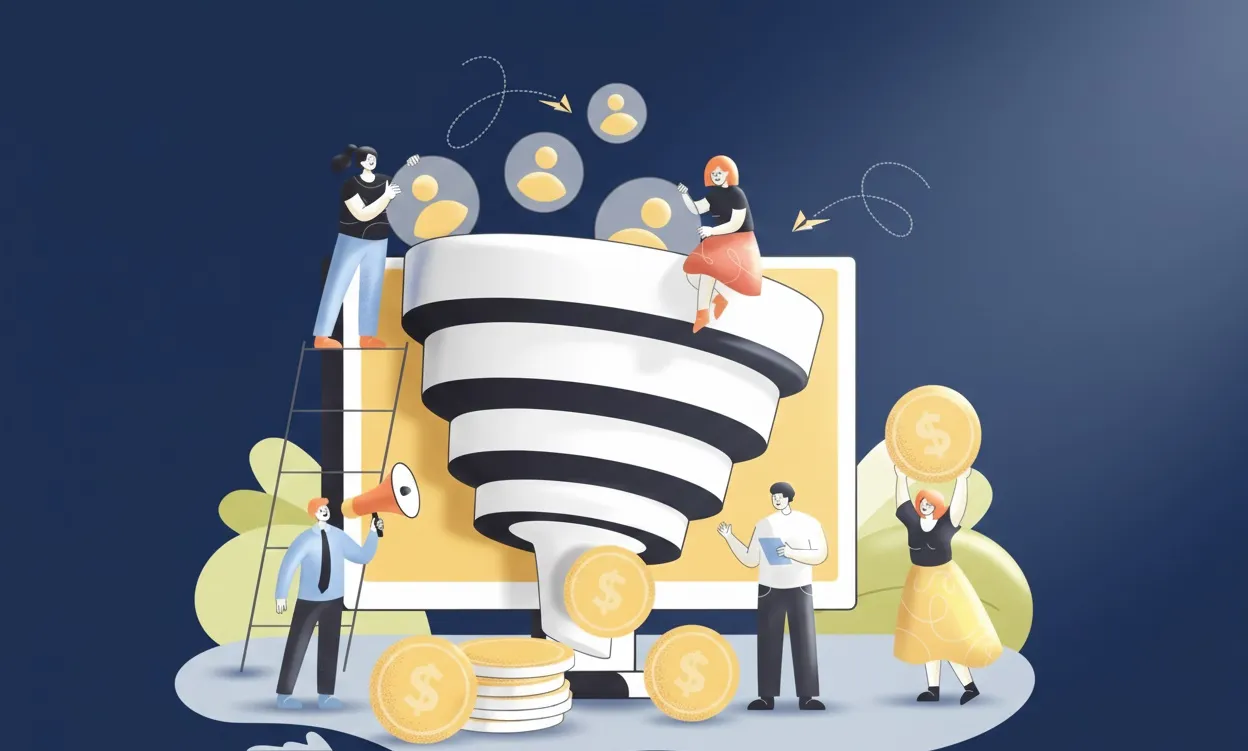



What I've observed in my experience is that motivation often wanes when the results don't follow despite the effort invested. You start a project with a lot of energy and then, after a few weeks or months, you realise that the figures are stagnating or that the returns are disappointing. This discrepancy between the effort and the expected gains ends up making you doubt yourself and the choices you've made. At such times, it's not simply a question of “motivation” but rather a need to reassess what's really working and what needs to change, without thinking that the drop in energy is a personal weakness.