When you think of social media, you probably think of Instagram, LinkedIn or TikTok. Pinterest rarely tops the list. However, the platform now has 631 million monthly active users in the first quarter of 2026, according to financial results published by Pinterest Inc. This figure represents a 12 % increase year-on-year. Even more telling: 85 % of weekly users say they have bought a product after seeing a branded pin. Pinterest is not a social media platform like any other. It is a visual search engine where users arrive with a clear intention: to find, plan and buy.
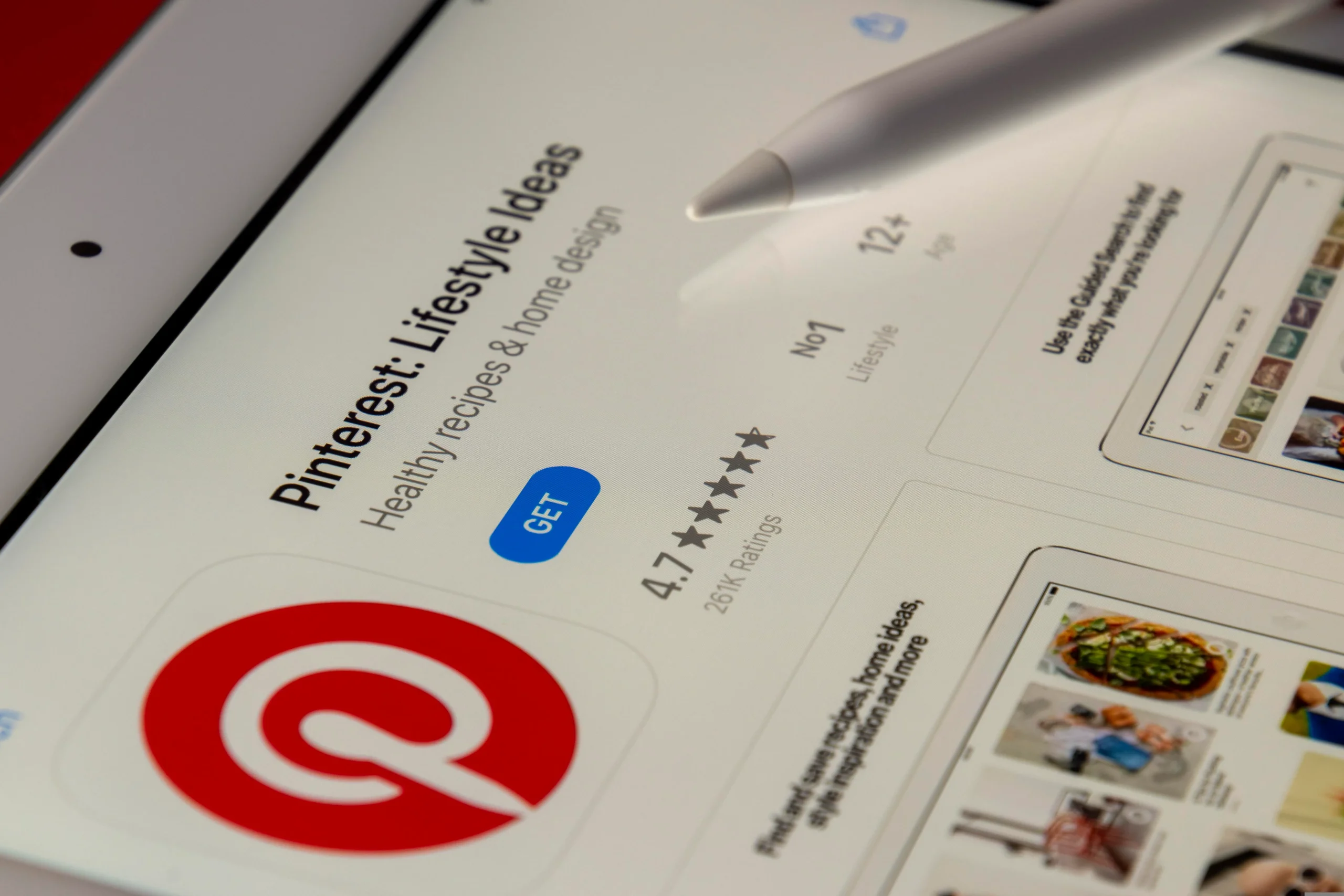
A search engine disguised as a social network
Confusion is common. Many business owners lump Pinterest in with Instagram or Facebook. This is a strategic mistake. On Instagram, you scroll out of habit. On Pinterest, you’re actively looking for a solution. This difference in intent makes all the difference to your business.
The data confirms this. According to Sprout Social, 96 % of the most popular searches on Pinterest are non-branded. In other words, users do not type in a brand name. They search for «living room decor ideas», «quick recipes for the week» or «summer wedding outfits». This presents an opportunity for any business – even an unknown one – that offers relevant visual content. Pinterest puts your offering in front of people who are searching for exactly what you provide, without brand recognition being a prerequisite.
Pinterest and the exceptional lifespan of content
This is what fundamentally sets Pinterest apart from other platforms. An Instagram post lasts a few hours. A tweet, a few minutes. A Pinterest pin continues to generate traffic for three to six months on average, according to a study by Tailwind. Some well-optimised pins remain active for well over a year.
This longevity turns every post into a long-term investment. You’re not creating disposable content. You’re building an asset that works for you for months on end, without any additional advertising expenditure. For a business short on time or marketing budget, this return on effort is hard to beat. Pinterest rewards consistency and quality rather than fleeting virality.
A way to drive targeted traffic to your website
Traffic – every business wants it. But not just any traffic. What matters is the quality of the visitors coming to your site. Pinterest excels in this respect. According to data compiled by Searchlab in 2026, the platform generates a referral traffic 33 % higher than Facebook’s. On average, advertisers see 32 % more web traffic within 30 days of launching Pinterest campaigns.
This result can be explained by the very nature of the user. Anyone who pins a product or an article is in planning mode. They are saving ideas for a future purchase, a renovation project or a meal to cook. Commercial intent is built into the very behaviour of the platform. Pinterest also reaches 40 % of US households with an annual income exceeding $150,000, making it a particularly attractive channel for premium brands.
How to use Pinterest effectively for your business
The first step is to create a Pinterest business account. This type of account gives you access to performance statistics, ad formats and Rich Pins, which automatically display your products’ prices, availability and descriptions. Without a business account, you’re sailing without a compass.
Next, think of Pinterest in the same way as you would think of SEO. Each pin must be optimised with relevant keywords in its title, description and image alt text. The platform processes 80 billion searches a month. Your visibility depends directly on your ability to respond to your potential customers’ queries using the right keywords.
Visual quality is non-negotiable. Pinterest is a world of images. Vertical formats (2:3 aspect ratio) deliver the best results. According to Pinterest Business, pins featuring text overlay generate 23 % more clicks than images alone. Invest in high-quality visuals that are easy to read on mobile, as 88 % of traffic comes from mobile devices.
The sectors that make the most of Pinterest
Certain sectors have a natural advantage on Pinterest. Interior design dominates the platform, accounting for 37 % of all pins published. The fashion, beauty, food and lifestyle sectors find a massive and engaged audience there. American food bloggers, for example, generate on average 3.2 times more traffic via Pinterest than via Instagram, according to data from Tailwind.
But Pinterest isn’t just about visual B2C content. Infographics, practical guides and educational content work remarkably well in B2B. Infographic-style pins are repinned three times as often as other formats and have a lifespan of over six months. If your company produces blog content, whether it’s white papers or tutorials, Pinterest is becoming a powerful distribution channel that is often overlooked by your competitors.
Generation Z: a rapidly growing audience on Pinterest
If you think Pinterest is only for women aged 35 to 55, the latest figures will surprise you. According to SQ Magazine, Generation Z now accounts for 42 % of the platform’s global users. This age group is carrying out 30 % more searches on the platform than in the previous year. Their main motivation is to discover new brands and products.
For a business targeting 18–30-year-olds, this finding is a game-changer. Pinterest offers access to a young audience with a strong intent to purchase, in an environment that these users associate with positive emotions. 78 % of weekly users say they feel good after using the platform. This creates a psychological environment conducive to discovery and conversion, quite unlike the background noise on Facebook or X.
Pinterest and return on advertising investment
Pinterest’s organic reach is already powerful. But its advertising side is also worth your attention. Shopping ads on the platform deliver an average return on ad spend (ROAS) of 2.3x, which is higher than for brand awareness or consideration campaigns. Campaigns using the Performance+ format (powered by artificial intelligence) reduce the cost per acquisition by 18 % on average compared to manually optimised campaigns.
What makes Pinterest even more attractive for small businesses is that the cost per click there remains, on average, 50 % lower than on Instagram, according to data from WordStream. Less competition, a highly engaged audience, and low costs. For a business looking to test the social media advertising without depleting its cash reserves, Pinterest represents a strategic entry point.
Take action on Pinterest
Start by reviewing your website. Do you have any visuals that your visitors might want to pin? Do your blog posts include images optimised for the vertical format? Your keyword strategy Does it include the search terms your potential customers type into Pinterest? These simple questions will determine whether you’re ready to make the most of the platform.
Plan your content in advance. Seasonal searches on Pinterest start four to six weeks earlier than on Google. If you sell Christmas-related products, your pins should be online as early as October. If you’re in the wedding industry, start posting as early as January. Pinterest rewards those who anticipate their audience’s needs.
You don’t need a ten-person marketing team to succeed on Pinterest. What you need is consistency, high-quality visuals and a clear understanding of what your ideal customer is looking for. Scheduling tools such as Tailwind allow you to plan your pins several weeks in advance and analyse performance in real time. By posting 15 to 25 pins a day, spread throughout the day, you can maximise your organic reach without spending hours on it.
The potential is there. The figures prove it. And competition, for the time being, remains moderate. Now is precisely the right time to incorporate Pinterest into your digital strategy and turn this underrated social network into a steady and sustainable source of traffic for your business.
Sources
- Pinterest Inc. (2026). Q1 2026 financial results: 631 million monthly active users, revenue up 18% year-on-year in Q3.
- Sprout Social (2026). 29 Essential Pinterest Statistics for Marketers in 2026. Data on non-branded searches (96 %), demographics and purchasing behaviour.
- SQ Magazine (2026). Pinterest Statistics 2026. Data on Generation Z (42 % of users), video views (+240 %) and 80 billion monthly searches.
- Searchlab (2026). Pinterest Statistics 2026: Over 80 Facts on Reach, Shopping and Ads. Data on referral traffic (+33 % vs Facebook), Shopping ROAS (2.3x) and advertising costs.
- Tailwind (2026). Studies on the lifespan of pins (3 to 6 months), the performance of infographics and the optimal posting frequency.
- Pinterest Business (2026). Data on pins with overlay text (+23 % clicks) and Performance+ campaigns (-18 % CPA).
- WordStream (2026). Comparison of cost per click on Pinterest versus Instagram (-50 % on Pinterest).
- Metricool (2026). Pinterest for Businesses: How to Use It in 2025. Data on external clicks (+55 %) and users’ purchasing power (+80 % in monthly expenditure).