SEO without keywords
For years, the recipe was simple. You found a keyword with a good search volume, you built an article around it, you repeated that keyword often enough, and Google rewarded you. It was mechanical, predictable and relatively effective.
Those days are over.
Not because keywords have disappeared. But because they have ceased to be the starting point for a solid SEO strategy. Google no longer reads your pages like a scanner looking for hits. It understands them. And this difference changes absolutely everything about the way you need to think about your SEO.
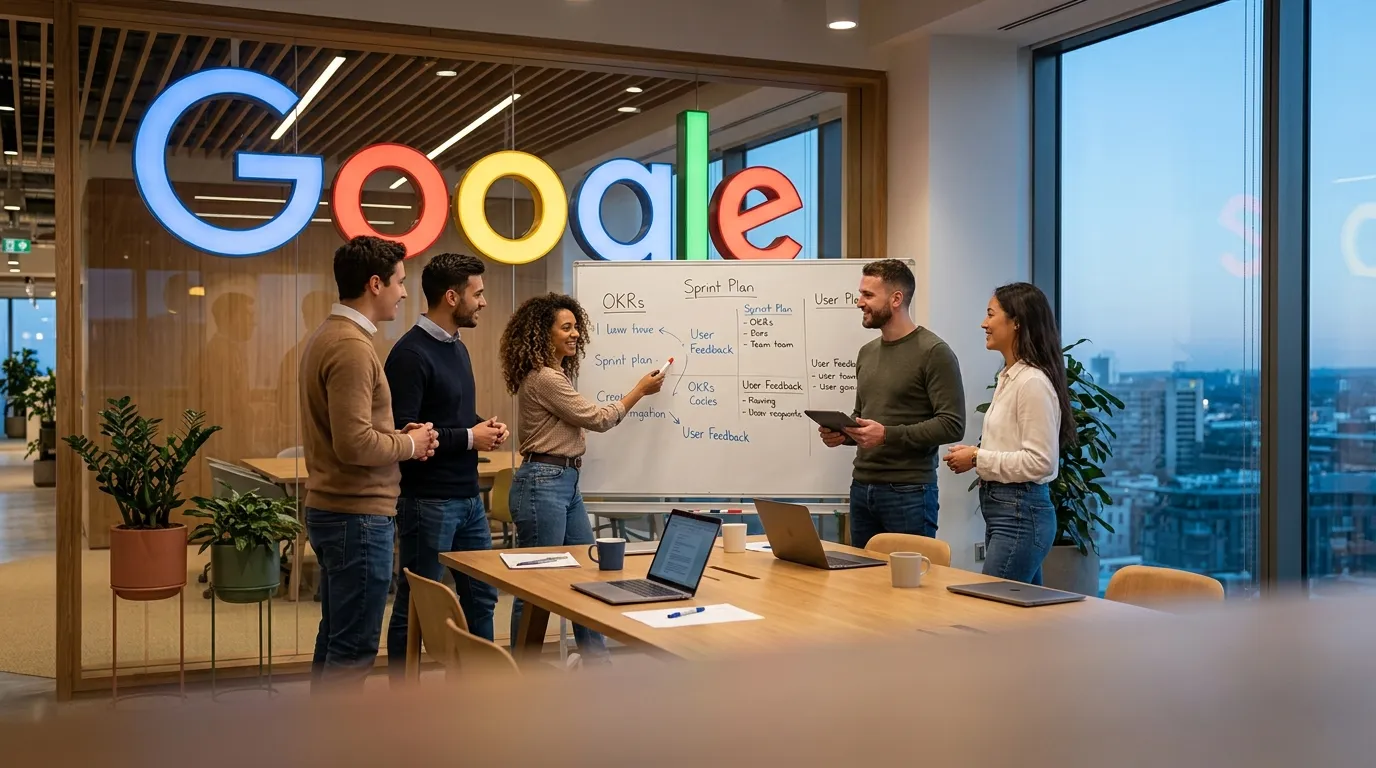
What Google understands today that you may be underestimating
In 2019, Google has deployed BERT, an algorithm based on natural language processing. In 2021, MUM was added to the system, providing an even more refined understanding of complex and multilingual queries. Then in 2023 and 2024, Helpful Content updates shifted the focus from surface technical optimisation to real relevance.
What these changes mean in concrete terms: Google is no longer looking for the keyword in your text. It looks for the answer to a question. It analyses the context, the entities mentioned, the relationships between concepts, the depth of the treatment of a subject. It wonders whether your page is the best possible response to what the user is really looking for.
It's a total paradigm shift. And many SEO strategies built before 2022 have not yet integrated this reality.
Search intent: the new centre of gravity in SEO
If keywords are no longer the starting point, what replaces them? L’research intention. In other words, the underlying reason why someone types a query into Google.
Let's take a concrete example. The query «hiking boots» can conceal radically different intentions. Someone who is just starting out and wants to understand which features to look for. Someone comparing specific models before buying. Someone looking for where to repair theirs. Someone who wants to know how to look after them.
The same keyword, four different intentions. Four different types of content. Four different pages to create if you want to respond appropriately to each of these intentions.
Google now classifies intent into four main categories: informational, navigational, commercial and transactional. Before creating anything, you need to identify which of these categories your target audience falls into. And build your content around that intent, not around a monthly search volume.
Topical authority: dominating a subject rather than a keyword
This is the concept that has most profoundly transformed semantic SEO strategy over the last three years: the topical authority. Thematic authority.
Google is no longer just looking for the best page on a subject. It's looking for the best site on a subject. The one that deals with an area in an exhaustive, coherent and expert way. The one where each page reinforces the legitimacy of the others.
A Semrush study published in 2024 analysed more than 700,000 domains and confirmed that sites that deal with a subject in depth on numerous interconnected pages systematically outperform sites that publish isolated content, even if it is very well optimised.
In practical terms, this means that publishing fifty articles on fifty different subjects is much less effective than publishing fifty articles that together cover a coherent thematic territory. If you work in nutrition, you don't publish an article on nutrition, one on sport, one on stress management and one on sleep in the hope of reaching a variety of keywords. You build a semantic cocoon around nutrition, with pillar pages and support pages that reinforce each other.
It is this thematic networking that Google is now rewarding.
What entities have changed in the way your content is read
Another concept that your SEO strategy absolutely must incorporate: entities. In Google's language, an entity is any identifiable and distinct element: a person, a place, an organisation, a concept, a product.
Since the deployment of Google's Knowledge Graph, the search engine no longer simply analyses words. It identifies entities and the relationships between them. When you write an article about fermenting kombucha, Google doesn't look to see if you've repeated the word «kombucha» ten times. It checks whether your content mentions the relevant entities in this field: SCOBY, acetic acid, probiotics, fermentation time, ideal temperature.
The absence of these entities in your content is a sign of superficiality. Their natural, contextual presence is a sign of expertise.
To enrich your content with relevant entities, tools such as Surfing SEO or Clearscope analyse the pages that are already positioned on your subject and identify the concepts that are systematically present. This is not copying. It's semantic mapping.
E-E-A-T: when Google checks who you are before what you say
Since Google updated its Search Quality Rating Guidelines in 2022, the E-E-A-T criterion has taken on a central role in content evaluation. Experience, Expertise, Authoritativeness, Trustworthiness. Experience, Expertise, Authoritativeness, Trustworthiness.
This framework means that Google no longer judges your content alone. It also judges who produces it. A medical article signed by an identifiable doctor, with sources cited and a visible update date, will always be better positioned than an anonymous article, even one that is technically better optimised.
For your strategy SEO semantics, this implies a number of concrete changes. Sign your content with a credible and verifiable author biography. Cite your sources accurately. Regularly update your existing content and indicate the date of revision. Build up your presence on third-party sites that are recognised in your sector to reinforce your domain authority.
These signals are not optional. They are an integral part of what Google evaluates to decide whether your page deserves to appear at the top of the results.
Keywords are not dead: they have changed their role
It would be inaccurate to say that keywords are no longer important. They still do. But their role has changed fundamentally.
They are no longer the starting point of your strategy. They are the final verification. First you identify a thematic territory to cover, an intention to satisfy, an audience to serve. Only then do you look at the terms that this audience uses to express its needs, and make sure that these terms appear naturally in your content.
It's a complete reversal of traditional logic. And it produces content that is infinitely more useful, more widely read and better positioned in the long term.
Tools such as Google Search Console are still essential for identifying the queries your pages are already appearing for, spotting missed opportunities and understanding how your audience actually formulates their questions. But they support your editorial strategy, not replace it.
What you really need to change in your approach
If you're still building your editorial calendar around a list of keywords sorted by search volume, here's what you should be doing differently.
Start by mapping your thematic territory. What is the area in which you want to be recognised as a benchmark? What are all the questions that a user might ask in this field, from the most novice to the most expert? This mapping becomes your content plan.
Next, identify your pillar pages, those that deal with a subject in depth and form the backbone of your semantic cocoon. Then create support pages that go into more detail on each sub-topic and link back to the main page. This internal mesh sends a clear signal to Google about the structure and coherence of your expertise.
Finally, audit your existing content. Many sites accumulate articles that deal with similar subjects without reinforcing each other, or even competing on the same queries. This is known as keyword cannibalisation. Solving the problem by merging or redirecting the pages concerned can produce significant positioning gains in just a few weeks.
Search Generative Experience is changing the game again
With the gradual deployment of AI Overviews a new dimension has been added to the semantic SEO strategy. Google now generates direct answers at the top of search results, based on the content it deems to be the most reliable and complete.
Appearing in these responses generated by Google's AI has become a strategic objective in its own right. The experts are talking about GEO, Generative Engine Optimization. And the content that makes it there all has one thing in common: it responds in a complete, structured and sourced way to a precise search objective.
This is no accident. This is exactly what a good semantic SEO strategy requires from the outset.
Google has changed radically. Not to make your job harder, but to reward what has always deserved to be rewarded: content that is useful, expert, honest, and built for humans before being built for algorithms. If your strategy aligns with this requirement, you have no search engine to fear.