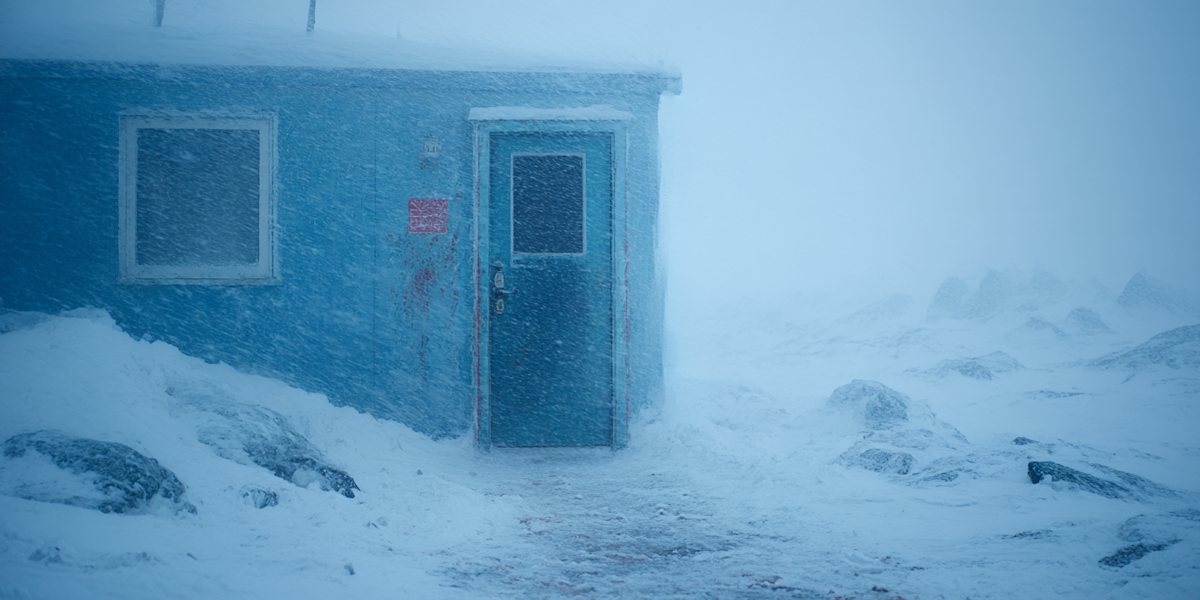
A major winter storm is currently affecting several regions of North America. Intense snowfall, extreme cold, transport disruption and risks to infrastructure. Faced with these conditions, the authorities, weather services and critical operators are increasingly relying on advanced technologies to anticipate and manage the situation. At the heart of this technological response is a IA mobilised to analyse, forecast and support decision-making.
For those of you who follow technology or climate issues, this episode provides a concrete illustration of how artificial intelligence is now being integrated into the management of extreme weather events.
AI mobilised
La AI mobilised is involved right from the forecasting phase. Traditional meteorological models, based on complex physical equations, are now supplemented by machine learning systems. These systems analyse massive volumes of data in real time. Satellite images, ground station readings, ocean data, historical climate data.
Thanks to this AI mobilised, forecasts are more accurate in terms of both space and time. As a result, you benefit from more precise warnings, sometimes localised to the scale of a district or a strategic transport route. The American and Canadian weather centres use these tools to adjust their bulletins and better anticipate storm developments.
Anticipating the intensity and trajectory of the storm
One of the major contributions of AI mobilised lies in its ability to detect weak signals. Slight variations in temperature or pressure can change the intensity of a signal. winter storm. The algorithms identify these variations more quickly than conventional methods.
Research carried out by meteorological institutes and universities shows that these systems improve forecasts of cold snaps and the areas most at risk. For you, this means more reliable information to anticipate risks and adapt your travel or activities.
Supporting critical infrastructure management
Winter storms put pressure on power grids, transport and communication systems. A AI mobilised is used to cross-reference weather data with infrastructure data. It can be used to identify areas at risk of blackouts or saturation.
Energy operators use these analyses to prioritise interventions. Studies published by energy regulators show that this approach reduces recovery time and limits the economic impact. Technology does not replace human intervention, but it does guide decisions.
Improving coordination of emergency services
La AI mobilised also plays a role in coordinating the emergency response. By continuously analysing the evolution of the storm and population flows, it helps to anticipate personnel and equipment requirements. Certain platforms can simulate different scenarios depending on the intensity of the cold or the accumulation of snow.
Research into crisis management shows that this anticipation improves the overall responsiveness of services. For you, this means better continuity of essential services, even in adverse weather conditions.
Understanding the limits of artificial intelligence
Despite its contributions, the AI mobilised is not infallible. Extreme weather phenomena remain complex and sensitive to numerous parameters. Models can diverge, particularly when the available data is incomplete or when rare events occur.
Experts in climatology and data science point out that artificial intelligence must remain a decision-making tool. Human interpretation remains essential, particularly when critical choices have to be made quickly.
A key tool for analysing economic impact
Beyond the weather, a AI mobilised is used to assess the potential economic impact. Logistical disruption, production stoppages, business closures. By combining meteorological and economic data, these systems provide useful estimates for the authorities and businesses.
Work by North American economic institutes shows that this approach makes it possible to anticipate losses and plan support measures. For you, this sheds light on the increasingly close links between climate, technology and the economy.
A trend set to strengthen
Winter storms are becoming more unpredictable and sometimes more intense. International climate studies highlight the increasing variability of extreme events. Against this backdrop, the AI mobilised is emerging as a strategic lever for strengthening regional resilience.
Public and private investment in these technologies is growing. The aim is not only to improve the accuracy of models, but also to make them more accessible to local authorities and those working in the field.
Sources and frame of reference
The information presented in this article is based on serious and identifiable sources. Work by the US and Canadian national weather services, publications by climate research institutes, university studies on machine learning applied to weather, reports by risk and energy management organisations.
These sources converge on a clear observation. Artificial intelligence is becoming a central tool in the management of extreme weather events, without replacing human expertise.
Technology for anticipation
The current winter storm illustrates a profound change in the way we deal with climate crises. Thanks to a AI mobilised, As a result, stakeholders have more precise tools at their disposal to anticipate, coordinate and limit the impact of climate change. For you, this development underlines the importance of understanding these technologies, not as miracle solutions, but as tools for making more informed decisions in an increasingly uncertain climate.