Digital does not wait. It moves forward, reconfiguring itself, sometimes discreetly, often radically. And 2026 looks set to be a pivotal year. Not because a single upheaval is going to change everything, but because several tech trends are converging at the same time. For businesses, content creators, marketing professionals and those who are simply curious about the digital world, understanding what's happening now will give you the means to act appropriately tomorrow.
Here are seven tech trends backed up by serious research, reports from recognised institutions and signals already observable in the real world.

1. Generative AI enters its operational maturity phase
Much has been said about the prowess of generative artificial intelligence since 2022. In 2026, the real change will no longer be in wonder, but in integration. According to the report AI Index 2024 from Stanford, companies that deploy generative AI tools in their internal processes are seeing measurable productivity gains, particularly in content creation, customer support and data analysis.
You no longer have just a tool that generates text. You have a silent collaborator who fits into your workflow. The nuance is important: this isn't a revolution coming from outside, it's a transformation that's taking place from within.
2. Search is changing: the end of the king click
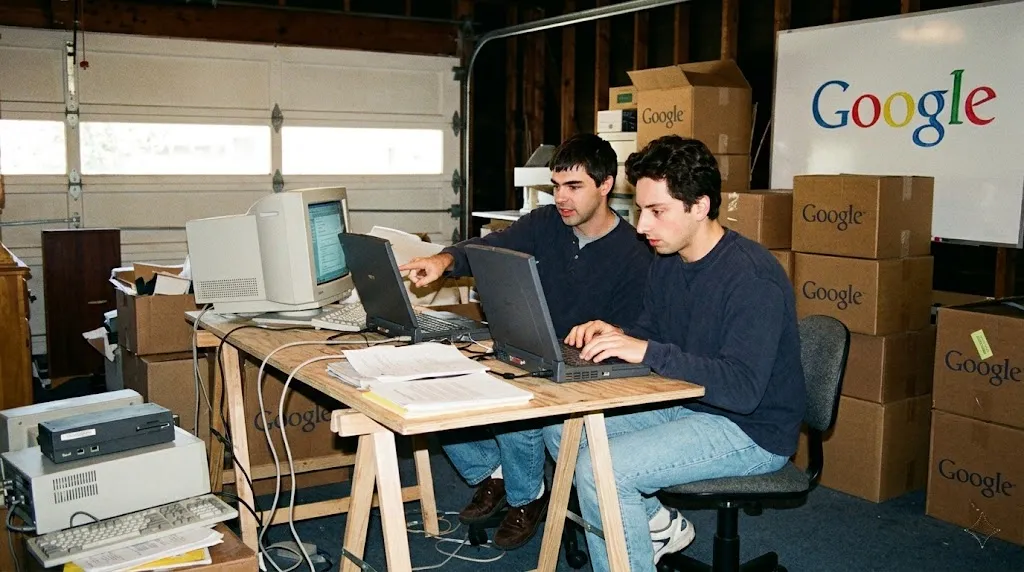
The search engine as you know it is changing. Google is massively rolling out its AI Overviews (formerly SGE), which answer users' questions directly without redirecting them to a third-party site. A BrightEdge study published in 2024 indicates that this type of direct response affects the organic click-through rate on certain informational queries.
For you, content creators or managers SEO, But what this means in practice is that you need to produce content that is designed to be cited, not just indexed. Depth, reliable sources and semantic structure are becoming your best allies in this tech trend that is reshaping the online attention economy.
3. The rise of autonomous AI agents
If generative AI impresses you, AI agents will surprise you. An AI agent doesn't just answer a question. It plans, executes tasks in sequence, interacts with external tools and adapts in real time. Companies such as Anthropic, OpenAI or Google DeepMind regularly publish work on these so-called «agentic» architectures.
In 2026, you're going to see agents capable of managing end-to-end advertising campaigns, monitoring analytical dashboards and triggering automatic corrective actions. This is no longer science fiction. It's a tech trend that's already visible in development environments and that's rapidly going to affect much wider sectors.
4. Hyper-contextual customisation becomes the norm
You're familiar with personalisation. You've seen your first name in an email, or a recommended product because you consulted a similar one yesterday. This level of personalisation is starting to look rudimentary.
By 2026, hyper-contextual personalisation will incorporate time, channel, past behaviour, geolocation and sometimes even the emotional state inferred from interactions. In its report, McKinsey estimates that The Value of Getting Personalization Right that companies that master advanced personalisation generate between 10 and 15 % more revenue than their competitors. This is not a marketing bonus. It's a structural competitive advantage.
5. Data confidentiality is reshaping the architecture of the digital world
The world without third-party cookies is now a reality. Safari and Firefox have been blocking them for a long time. Chrome, after several postponements, is moving towards a more privacy-friendly browsing model. At the same time, the European Data Protection Regulation (RGPD) has inspired similar legislation in more than 130 countries, according to UNCTAD.
This tech trend is not just a regulatory constraint. It is forcing organisations to completely rethink their relationship with data. Companies that invest in first-party data collection, in transparency with their users, and in trusted architectures, are the ones that will emerge victorious from this shift. It's in your interest to anticipate this trend rather than suffer from it.
6. Short-form video content continues to dominate, but is evolving
TikTok, Reels, Shorts: you already know that the short format reigns. But in 2026, it's no longer just a question of length. It's a question of information density and perceived authenticity.
Platforms are refining their algorithms to value content that generates real engagement, substantial comments, shares outside the platform and full viewing time. A Wyzowl study published in 2024 showed that 89 % of consumers were convinced to buy a product or service after watching a brand video. Content is taking over from form. You can film with a smartphone, but you have to have something to say.
7. Interface tech trends: voice and ambience
The final frontier of digital is the elimination of the interface. You won't necessarily be opening an application. You'll be interacting with digital surfaces integrated into your environment: smart speakers, connected glasses, voice interfaces embedded in vehicles or workspaces.
Voice searches already account for a significant proportion of mobile queries, according to data compiled by ComScore and Search Engine Land. And with the arrival of devices such as AI-enabled glasses (Meta Ray-Ban, or projects from Google and Apple), tech trends are clearly pointing towards more ambient digital experiences, less visually intrusive, but more present in everyday life.
For you, it's not a question of choosing between screen and voice. It's about understanding that the user experience is now played out on several registers simultaneously.
What this means for you in practical terms
These seven tech trends are not an abstract list. They form a map. Each trend is a signal that digital is becoming more complex, but also more intelligent, more personalised and, paradoxically, more human in its interactions.
The real question is not «which tech trend should you adopt first?» The real question is: which is the most critical for your sector, your audience and your resources today?
You don't need to do everything. You need to do the right things, at the right time, with the right understanding of the forces at play. And that's exactly what these tech trends allow you to anticipate.
2026 will not be the year when everything changes at once. It will be the year in which those who have already begun to prepare will gain a decisive head start.