When you sit down in front of an investor, your slides only buy a few minutes' attention. Then comes the hard part. The questions become surgical. What's the price? How much has it grown? Over what period? And above all, what do these figures say about your ability to perform?
The good news is that you don't need fifty indicators to be convincing. A small core of well-chosen metrics is more than enough. These are the 5 KPI startup investors that almost always come back to the table, with the right thresholds and the right reflexes for presenting them.
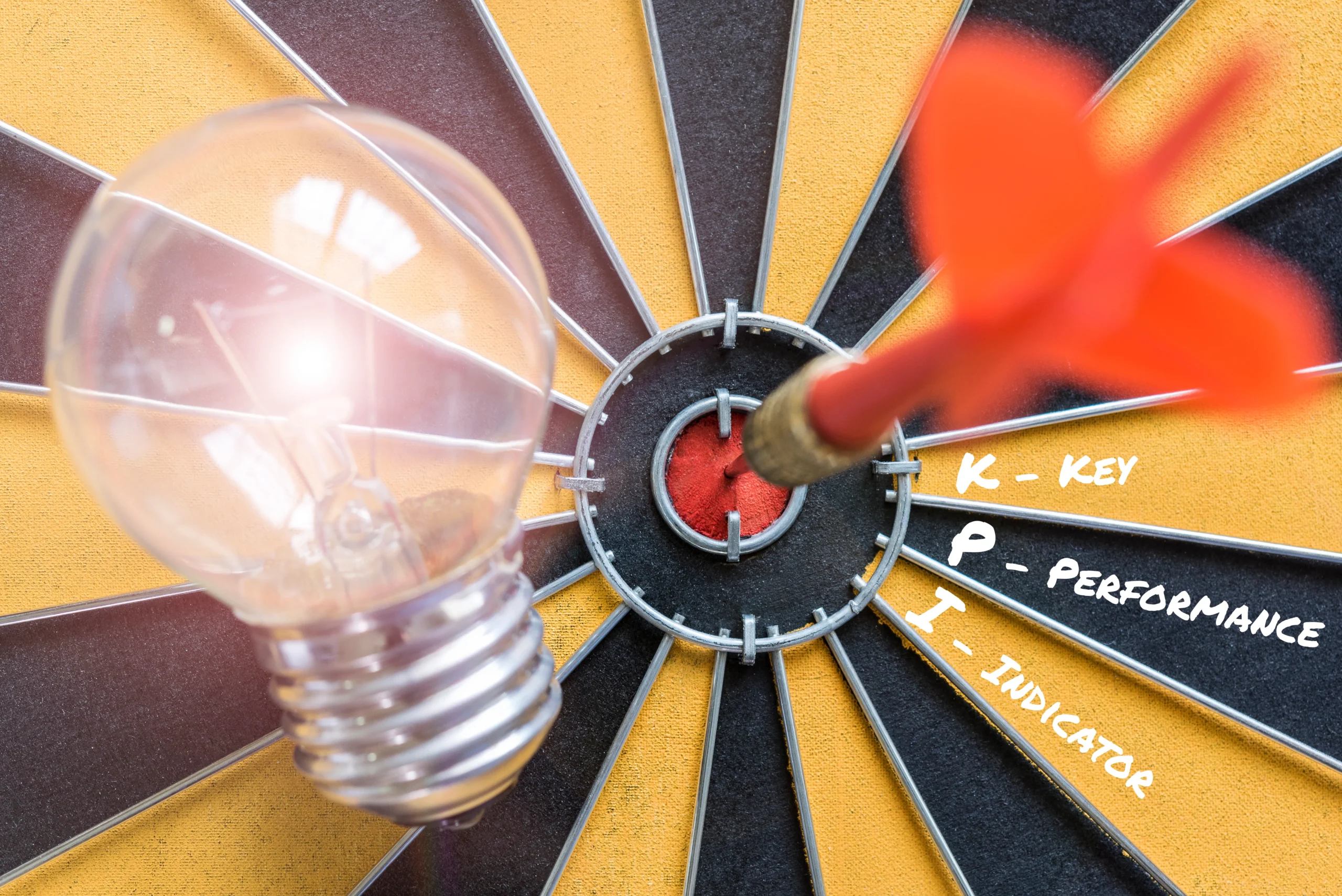
Why start-up investor KPIs are so important today
The financing environment has changed. Since the slowdown of 2022, capital has become more expensive, and funds are analysing your figures in much greater depth than before. According to analyses published by Linkera and Skalin, gross growth is no longer enough to justify a valuation. What counts now is the overall consistency between your indicators and the transparency with which you present them.
Controlling your KPIs startup So investing is not a comfort exercise. It's a survival skill. Numbers protect you. They protect your team. And they often turn the balance of power on its head in negotiations, because they turn an emotional pitch into a rational demonstration.
1. MRR and ARR: measuring your rhythm
Le monthly recurring revenue (MRR) and its annualised equivalent’Annual Recurring Revenue (ARR), These are the first lines that any investor looks at. For a subscription model, they reflect the predictability of your turnover.
Investors never stop at the absolute amount. They look at the curve. A monthly increase of 3 to 5 % in the efficiency phase, or an annual doubling at the start of Series A, are solid signals. The so-called T2D3 (triple two years, double three years) remains a recognised compass for American funds.
Also show the breakdown of your MRR: new customers, expansion, contraction, churn. It's this detail that shows you're in control of your business rather than being subjected to it. And it's what distinguishes a prepared founder from an enthusiastic but vague one.
2. Burn rate and runway: controlling your time
Le burn rate is what your start-up spends each month to run. The runway indicates how many months you have left before you hit zero. According to Phoenix Strategy Group, investors prefer to see between 12 and 18 months' visibility when they have a serious discussion.
Why this obsession? Because a large proportion of start-ups that fail do so because of poor financial planning. A founder who knows his burn to the penny sends out a powerful signal. He is in control of his destiny, not the other way round.
Be transparent. Distinguish between your gross burn (total expenses) and your net burn (after income received). Present several scenarios. This honesty in figures is often better than an over-optimistic projection, which the investor will ask for anyway in a few minutes of due diligence.
3. CAC and LTV/CAC ratio: the viability of the model
Le customer acquisition cost (CAC) measures how much you spend to win a paying customer. The Lifetime Value (LTV) estimates what it will earn you over its lifetime. The ratio between the two is, according to Klarity and Wall Street Prep, the number one metric for venture capital funds.
The reference threshold is widely shared. A LTV/CAC ratio of 3:1 signals a healthy model. Below 1:1, you are losing money with every customer you acquire. Above 5:1, you are probably under-investing in your growth.
Also think about the CAC payback period, i.e. the time needed to recover the acquisition cost. Re:cap and Drivetrain agree on the same rule. Less than 12 months is excellent, and up to 18 months is acceptable, depending on your target (SME or major account). Beyond that, investors are concerned, and they'll tell you so in no uncertain terms.
4. NRR: proof that your customers love you
Le Net Revenue Retention (NRR) measures the sales of your existing customer cohort twelve months later. It incorporates renewals, expansion (upsell, cross-sell), contraction and churn into a single number.
Why are funds so fascinated by this KPI? Because it reveals whether your product really creates value over time. Above 100 %, you are gaining more from your existing customers than you are losing. Between 90 and 100 %, you're holding on to your base. Below 90 %, the alarm bells are ringing.
The benchmarks are clear. According to the 2026 benchmarks compiled by Bessemer Venture Partners and ChartMogul, the most admired SaaS have an NRR of between 120 and 130 %. OpenView Partners even observes that companies above 120 % are 1.8 times more likely to double their turnover the following year. This explains the sometimes dizzying valuations, even without immediate profitability.
5. Multiple burn: capital efficiency
Popularised by David Sacks, co-founder of Craft Ventures, the multiple burn has, in the space of a few years, become the preferred indicator for cautious investors. Its formula is crystal clear. It is the net burn divided by the new net ARR generated over the same period.
The idea can be summed up in one sentence. How many euros do you burn to create one euro of additional recurring revenue? Sacks himself sets the benchmark in his seminal text published on Substack. Below 1, you have a number-printing machine. Between 1 and 2, it's very good. Above 2, doubt sets in. Above 3, you're in the red zone.
This KPI is essential because it combines growth and financial discipline in a single figure. It avoids theatrics. It encourages each team to spend better, not just spend more. Scale Venture Partners is now using it as the first filter in its comparative analysis of the SaaS market.
How to present your startup investor KPIs intelligently
Startup investor KPIs are not raw numbers. They are stories that can be defended. To make them convincing, three simple principles will save you a lot of anguish.
Show the trend, never an isolated photo. Present your metrics over at least six to twelve months, with an honest reading of the low points.
Compare with benchmarks in your sector and your stage. This shows that you know where you really stand, and that you're not applying American benchmarks to a completely different context.
Anticipate blind spots. Investors will look for grey areas. Prepare them yourself. This attitude inspires confidence, because it reflects a maturity that is rare among first-time founders.
Taking care of these 5 investor startup KPIs also means taking care of your peace of mind. You turn a stressful meeting into a conversation between equals. You speak the language that the other person expects, without denying your own.
As you can see. Startup investor KPIs are not an end in themselves. They are the tools that prove that your vision holds up. They give weight to your story. And above all, they give you the one thing that startup founders lack most: the ability to sleep at night.