You're investing in a website, visual identity, interface redesign or product packaging. The question always comes up. What is the concrete return on your sales? Measuring the impact of design on sales performance therefore becomes a strategic challenge, not just an aesthetic one.
Design influences perception, trust and purchasing decisions. Yet many companies still see it as a cost centre. The data shows the opposite to be true. Organisations that integrate design into their strategy achieve superior financial results.
The work of the McKinsey Design Index published by McKinsey show that the most design-led companies outperform their competitors in terms of revenue growth and total shareholder return. Design is not decorative. It's structural.
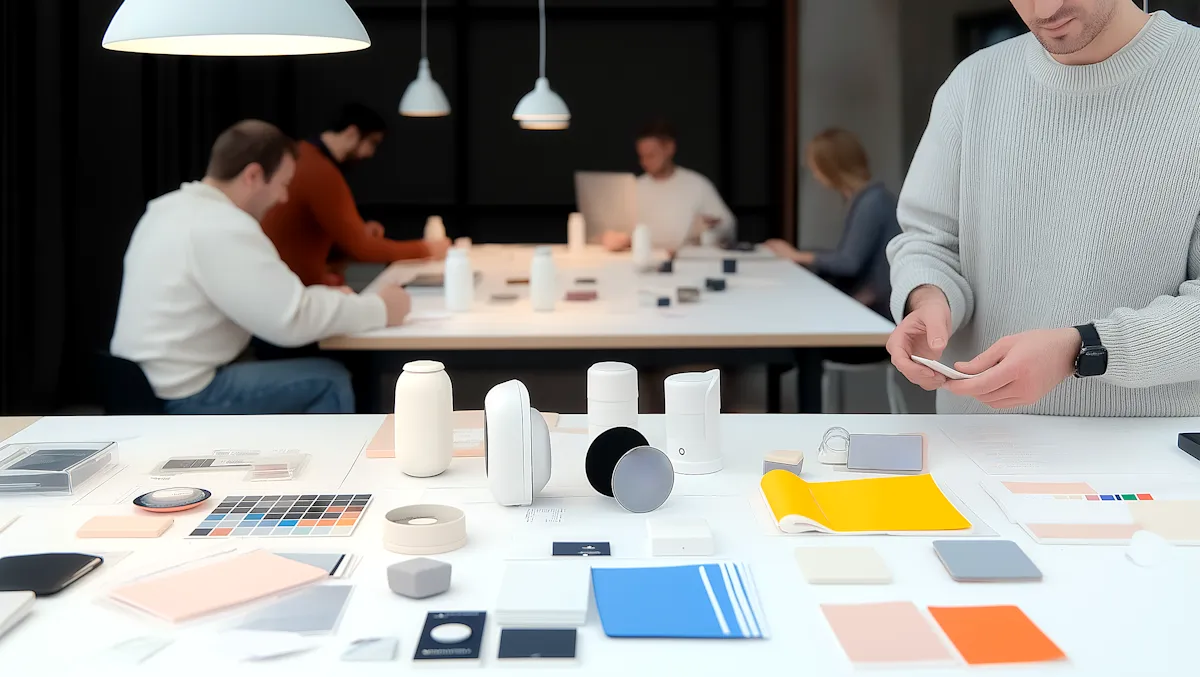
Impact of design
The impact of design can be seen at several levels. User experience, brand image, fluidity of the customer journey, understanding of the offer. Every point of visual contact influences the purchasing decision.
When you want to measure the impact of design on sales performance, you first need to define what you mean by performance. Increase in conversion rate. Increase in average shopping basket. Reduced cost of acquisition. Improved customer loyalty.
Without precise indicators, your analysis remains subjective.
Design as a conversion driver
The link between design and conversion is well documented. Research into cognitive psychology shows that individuals form a first impression of an interface in just a few milliseconds. This perception influences perceived credibility.
Studies published in the Behaviour and Information Technology Journal show that the aesthetic quality of a site has an impact on trust and the intention to buy. If your interface looks confusing or dated, the likelihood of conversion decreases.
To measure the impact of design on sales performance, you can compare the conversion rate before and after a redesign. Also analyse the bounce rate, time spent on the page and progress through the sales tunnel.
Key indicators to monitor
You need to structure your analysis around KPI clear.
Conversion rate.
Basket abandonment rate.
Average session length.
Click-through rate on calls to action.
Average value of orders.
Customer retention rate.
These indicators make it possible to directly link your design choices to financial results. If you change the visual hierarchy of a product page and the rate of additions to the shopping basket increases, you'll see a measurable signal.
The impact of the design becomes tangible when you link each modification to a precise indicator.
Rigorous assessment methods
Measurement requires an experimental method. A B tests are a central tool. You are comparing two versions of a page. An original version. A visually or ergonomically optimised version.
Statistical principles must be respected. Sufficient sample size. Adequate test duration. Control of external variables. Research into numerical experiments has shown that poorly designed tests produce erroneous conclusions.
To measure the impact of design on sales performance, you need to isolate the variables. If you change the price, the marketing message and the colour of a button at the same time, you won't be able to identify the exact cause of the change in results.
User experience and loyalty
Design is not just about acquisition. It influences loyalty. A fluid experience reduces frustration and boosts satisfaction.
The work of the Nielsen Norman Group on ergonomics show that ease of use improves the probability of return and recommendation. Clear navigation, simplified forms and coherent architecture reduce cognitive load.
You can measure this effect through the re-purchase rate, Net Promoter Score and customer lifetime. If these indicators improve after optimising the interface, the impact of the design goes beyond the initial conversion.
Design and value perception
Design influences perceived value. A coherent, professional visual identity can often justify a higher price.
Marketing studies published in the Journal of Consumer Research have shown that the visual presentation of a product affects its perceived quality and willingness to pay. Packaging, typography and product photography all play a major role.
Measuring the impact of design on sales performance therefore involves analysing changes in the average basket or the acceptance rate for a premium offer following a visual improvement.
Design and credibility
Credibility is a key factor in online purchasing decisions. Research by the Stanford Persuasive Technology Lab indicate that visual design is a determining factor in assessing the reliability of a site.
If your platform looks amateurish, visitors will hesitate. If it looks structured and coherent, trust increases. You can see this effect in the decrease in the bounce rate and the increase in the number of forms completed.
The impact of design therefore affects the psychological dimension of the customer journey.
Return on design investment
To convince a management committee or financial partners, you need to translate the design into figures.
Calculate the total cost of a redesign. Compare sales before and after optimisation. Include savings from reduced customer support if the interface becomes more intuitive.
Financial analyses should include marginal cost and payback period. If an ergonomic improvement reduces user errors and requests for assistance, you obtain a measurable indirect gain.
Measuring the impact of design on sales performance then becomes an exercise in calculating return on investment.
Design system and overall coherence
A fragmented approach limits efficiency. Successful companies implement a design system. This guarantees consistency, speed of execution and reduced development costs.
Research into digital project management shows that standardising components improves quality and reduces lead times. Visual consistency also enhances brand recognition.
The impact of design therefore extends to internal efficiency and team productivity.
Limitations and interpretation bias
You have to be careful. Not all positive changes come from design alone. Seasonal variations, marketing campaigns or changes in the market also influence performance.
Rigorous analysis requires a number of indicators to be cross-referenced and observation to be maintained over a sufficiently long period. Hasty conclusions can lead to erroneous strategic decisions.
Measuring the impact of design on commercial performance therefore requires method, patience and analytical discipline.
Integrated strategic approach
Design must be integrated right from the offer conception phase. Not added at the end of the process. The companies mentioned in the McKinsey Design Index share one thing in common. Design is represented at a strategic level.
You need to align visual identity, user experience and brand positioning. Consistency boosts commercial effectiveness.
The impact of design is greatest when strategy, technology and marketing work together.
Operational perspective
If you want to take concrete action, start with an audit. Analyse your key pages. Identify the friction points. Collect quantitative and qualitative data.
Define clear hypotheses. Test them. Measure. Adjust. Document the results. This structured approach enables you to turn design into a measurable lever.
Measuring the impact of design on commercial performance is not a matter of artistic intuition. It's an analytical approach based on indicators, experiments and rigorous observations.
When you link aesthetics, ergonomics and commercial strategy, you change your perspective. Design becomes a strategic investment. You're no longer just looking to please visually. You're optimising an experience capable of influencing real business decisions.
By adopting this approach, you can reinforce the consistency of your brand, improve your conversion rates and consolidate your profitability. The impact of design is no longer abstract. It becomes a concrete factor in sustainable commercial performance.