You run an industrial company. Or you work in one of the sectors that manufacture, transform and assemble. And for some years now, you've been hearing talk of Industry 4.0, digitalisation, connected factories, artificial intelligence applied to production. Institutional speeches are enthusiastic. The reports are optimistic. But on the ground, in your workshops and production lines, the reality is often more nuanced, slower and more complex than the conferences suggest.
So where do European industrial companies really stand in their digital transformation? Not in the technological showcases. Not in the use cases carefully selected for institutional brochures. But in the majority of factories, SMEs and VSEs form the backbone of Europe's industrial fabric.
What Industry 4.0 means in concrete terms for a company
Before measuring progress, we need to agree on what we are measuring. Industry 4.0 is a concept coined in Germany in 2011, as part of a government initiative to prepare German industry for the challenges of the fourth industrial revolution. Klaus Schwab, founder of the World Economic Forum, popularised the term in his book The Fourth Industrial Revolution published in 2016, describing the convergence of physical, digital and biological technologies that are profoundly transforming production methods.
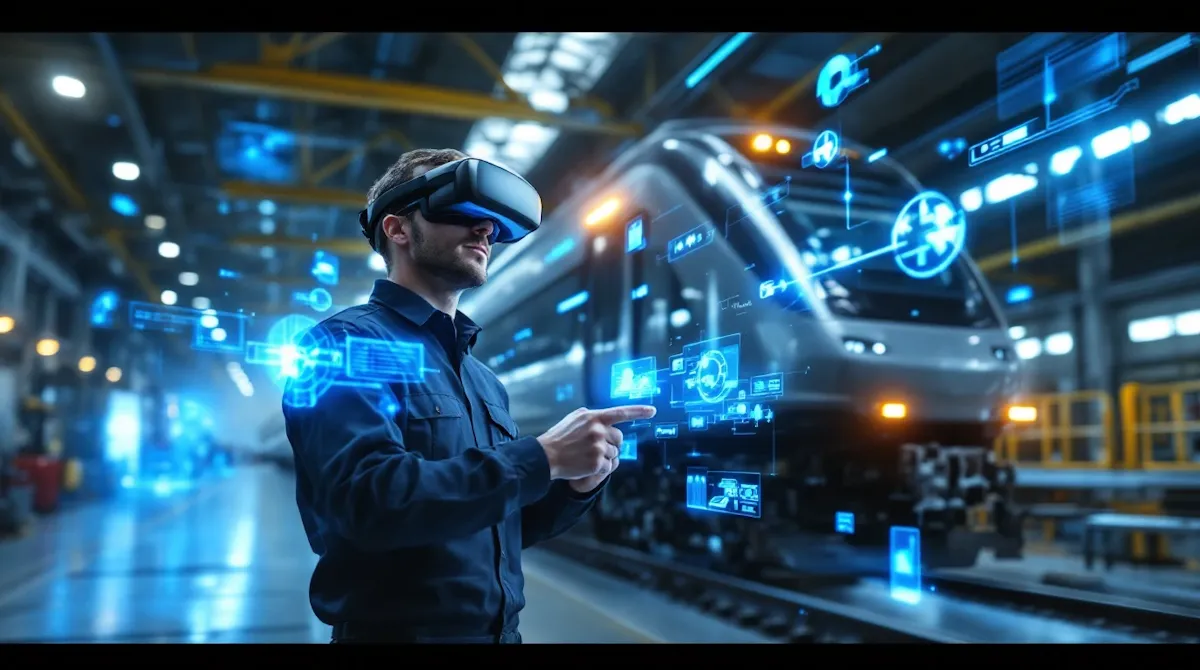
In concrete terms, for an industrial company, this means integrating technologies such as the Internet of Industrial Objects, cyber-physical systems, artificial intelligence applied to predictive maintenance, digital twins, collaborative robotics and real-time data analysis. These technologies are not gadgets. They are transforming the way you produce, plan, maintain and deliver.
Industry 4.0 in Europe: a mixed picture by country and company size
The data available on the actual progress of digital transformation in European industry reveals a deeply contrasting picture. The Industrial Eurobarometer published by the European Commission in 2023 shows that while 72 % of large European industrial companies have initiated a structured digital transformation process, this figure falls to 38 % for SMEs with fewer than 250 employees. This digital divide between large and small companies is one of the most critical challenges facing European industry.
Germany remains the undisputed benchmark. Its Mittelstand model, the medium-sized industrial SMEs that form the backbone of its economy, has been the ideal testing ground for 4.0 technologies. The Fraunhofer Institutes, one of the world's largest networks of applied research centres, have played a central role in transferring technology to these companies. The result is a level of industrial digital maturity that significantly exceeds the European average.
France, with its Industrie du Futur plan launched in 2015 and reinforced by the France 2030 plan, has made measurable progress in certain sectors such as aerospace and automotive. But according to Bpifrance's annual report on the digital transformation of French SMEs, more than 60 % of industrial companies with fewer than 500 employees say they have not yet embarked on a structured approach to digitising their production processes.
The real obstacles to industrial digital transformation
If transformation is slow in many companies, it's not for lack of interest or ambition. It's because the obstacles are real, numerous and often underestimated by those who design industrial policies from their offices.
The first obstacle is financial. Investing in connected sensors, modern ERP systems, data analysis platforms or collaborative robots represents significant investment that many industrial SMEs cannot afford without external funding. The European Union has made considerable funds available via the Horizon Europe programme and the Recovery Plan. NextGenerationEU, However, effective access to these funds remains complex for companies whose administrative teams are often small.
The second barrier is human. Industrial digital transformation requires skills that many companies do not have in-house. According to a study by McKinsey Global Institute published in 2023, Europe is facing a shortfall of 4 million skilled workers in fields linked to industrial digital technologies by 2030. Training existing teams and attracting new talent in industrial sectors that are often perceived as unattractive by young graduates is a challenge that you are probably familiar with if you run a company in this sector.
The third barrier is organisational. Introducing 4.0 technologies into a plant involves more than just installing equipment. It involves a profound transformation of processes, work habits and sometimes the entire corporate culture. This resistance to change has been documented by innovation management researchers, notably in Clayton Christensen's work on organisational disruption.
Industry 4.0 in Europe: the sectors that are really making progress
Despite these obstacles, some European industrial sectors are moving forward at a pace that deserves to be honestly documented.
The automotive industry is probably the one that has made the most progress. Under the combined pressure of the electric transition and competition from Asia, European carmakers and their subcontractors have invested massively in advanced robotics, digital twins for their production lines and predictive quality analysis. Volkswagen's Wolfsburg plant is regularly cited as one of the most technologically advanced in the world.
The pharmaceutical industry, for its part, has accelerated its digital transformation under the direct impact of the Covid-19 pandemic. The need to produce faster, with greater traceability and fewer errors, has prompted groups like Sanofi and Bayer to invest massively in digitising their manufacturing and quality control processes.
The European aerospace industry, driven by Airbus and its network of suppliers, has developed additive manufacturing and predictive maintenance practices that are now global benchmarks in their sector.
What to do if you haven't started yet
If you are reading this article and recognise yourself as one of those companies that have not yet structured their digital transformation approach, here is what the experts unanimously recommend as a starting point.
Don't start with technology. Start with an honest diagnosis of your current processes. Identify the three or four most costly friction points in your production chain. Ask yourself: could digital technology solve this problem in a measurable way? If so, this is your first use case. If not, keep looking.
This pragmatic approach, recommended by the network of European Centres of Excellence in Industry 4.0, avoids the trap into which many companies fall: buying sophisticated technologies without clear use cases, generating complexity without added value, and concluding that Industry 4.0 does not work for them.
What you need to remember
Industry 4.0 in Europe is making progress. But its progress is uneven, with leaders widening the gap and a silent majority of SMEs still hesitating to take the plunge. The delay is not inevitable. It is the result of real obstacles that can be overcome with resources, skills and a clear method.
What the history of previous industrial revolutions teaches us is that companies that waited for technology to be perfect before adopting it generally didn't survive to see it mature. You don't need a total transformation tomorrow. You need a concrete, measured, result-oriented first step. That's where it all starts.