You manage an online shop. You've built up your catalogue, your website and your customer relations. Then, one morning, you read that the Strait of Hormuz is virtually blocked, that tankers are no longer passing through, that fuel prices are soaring and that delivery times are exploding worldwide.
This is not fiction. It is the news of March 2026. And its consequences for e-commerce are already measurable.
This article is not about panicking. It's about understanding what's happening, why it affects you directly and, most importantly, what you can do now to protect your business.
What's really happening in the Strait of Hormuz
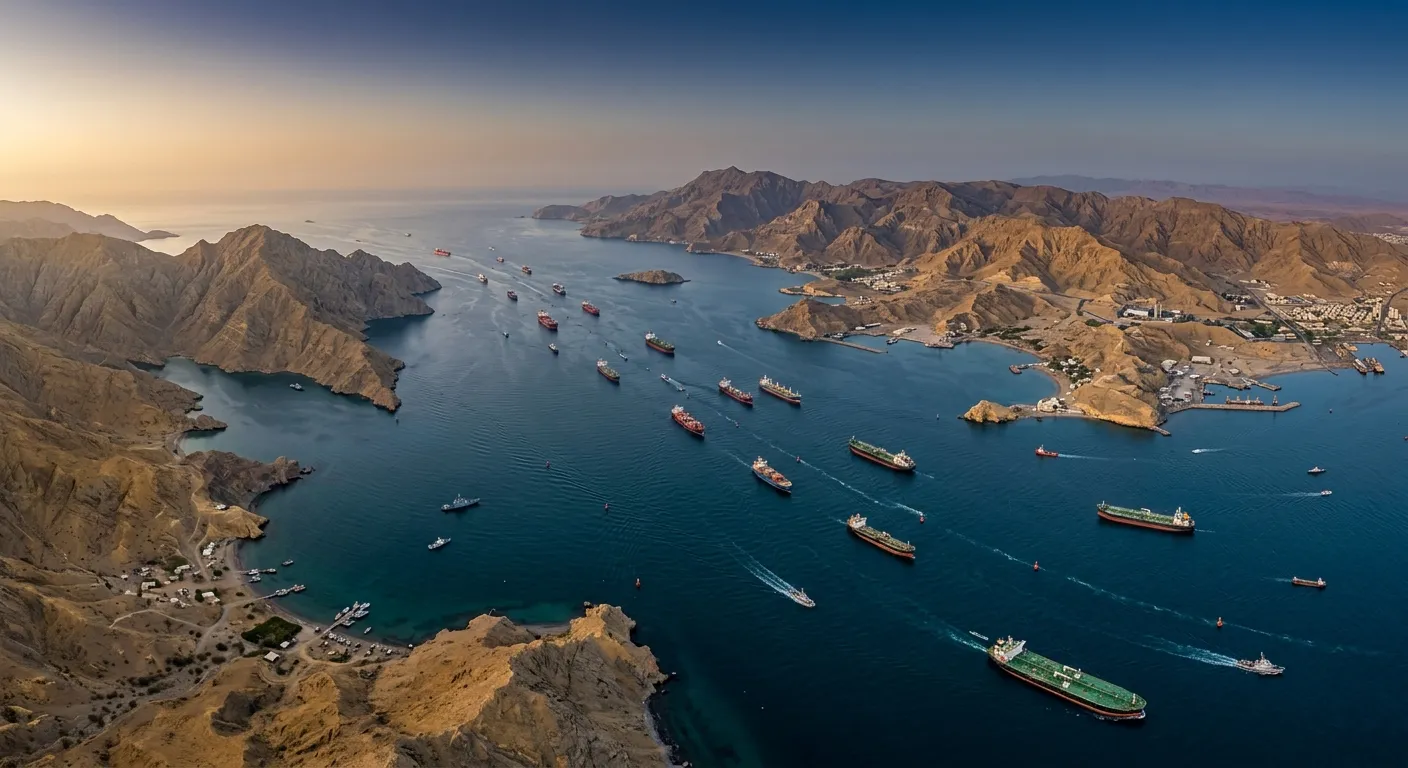
Le Strait of Hormuz is a strategic sea passage between Iran and the Sultanate of Oman. It links the Persian Gulf to the Indian Ocean. According to the International Energy Agency, this corridor, which is just 33 kilometres wide at its narrowest point, carries around 20 % of the world's crude oil and a significant proportion of its liquefied natural gas.
When this passage is disrupted, it's not just the price of oil that goes up. It's the entire global supply chain that seizes up. Shipping costs rise. Cargo insurance costs are soaring. Delivery times are getting longer. And stock-outs are multiplying in sectors you'd never expect to be linked to oil.
In March 2026, Iran significantly reduced shipping traffic in the Strait of Hormuz in response to US and Israeli military strikes. The logistical consequences are already being felt in European and Asian markets.
For your online shop, this disruption is not abstract. It is concrete, immediate and potentially lasting.
Why your online shop is directly affected
You may sell products manufactured in South-East Asia, China or India. You may use packaging whose raw materials cross sensitive shipping routes. You may be dependent on carriers whose operational costs are indexed to the price of fuel.
In all these cases, the disruption of the Strait of Hormuz affects you, even if you don't sell oil.
An International Monetary Fund study published in 2024 on the effects of geopolitical tensions on world trade shows that a major disruption of a strategic sea lane leads to an average increase of 15 to 25 % in sea freight costs on the routes concerned in the six weeks following the event. This inevitably has an impact on the purchase prices, margins and delivery times announced to your customers.
If you don't adapt, your customers will feel the effects before you've even had time to react. Unanticipated delays, uncommunicated stock shortages, prices that change without explanation: these are all signals that erode the trust you have taken months or years to build up.
The Strait of Hormuz and e-commerce: three impacts to anticipate
Understanding exactly how the crisis in the Strait of Hormuz affects your day-to-day business as an e-tailer will enable you to take targeted action rather than reacting in a hurry.
First impact: longer delivery times
Shipping companies avoiding the Strait of Hormuz have to round the Cape of Good Hope in South Africa. This diversions adds ten to fourteen days to the journey, depending on the route. For you, this means longer replenishment times, stocks that run out faster than expected and delivery promises to your customers that are difficult to keep.
Second impact: higher supply costs
Longer sea freight is more expensive. Insurers pass on the geopolitical risk in their rates. Freight forwarders add surcharges. At the end of the chain, your purchasing costs rise. If your selling prices don't change, your margins will erode. If you pass on the increase to your customers, you risk losing competitiveness.
Third impact: uncertainty over stocks
The disruption of the Strait of Hormuz creates an uncertainty that is difficult to manage: you don't know exactly when your orders will arrive, or at what price. This uncertainty complicates stock management, promotional planning and communication with your customers.
Diversifying your suppliers: the lesson of the crisis
The 2020 pandemic had already highlighted the fragility of supply chains concentrated in a single country or region. The crisis in the Strait of Hormuz in 2026 confirms that this fragility has not disappeared.
If you depend on a single supplier located in a geographical area exposed to current tensions, you are particularly vulnerable. Geographical diversification of your sources of supply is no longer an option reserved for large companies. It's a necessity for any online shop that wants to get through crises without major disruption.
In practical terms, this means identifying alternative suppliers in Europe, North Africa or Turkey for the most exposed product categories. Local or regional sourcing can sometimes cost more per unit, but it offers a resilience that the crisis in the Strait of Hormuz has made invaluable today.
The platforms B2B European contacts with local suppliers are a concrete starting point for this diversification without starting from scratch.
Strait of Hormuz: how to communicate with your customers without losing their trust
The temptation, when faced with a logistical crisis, is to say nothing and hope that the delays go unnoticed. This is the worst possible strategy.
Your customers are adults. They read the news. They know the world is going through a difficult time. What they expect from you is not that everything will go perfectly. It's that you're honest about what's going on and transparent about what you're doing about it.
Proactive communication on extended lead times, accompanied by a clear explanation of the geopolitical context, is perceived positively by a large majority of consumers. A Salesforce study on online purchasing behaviour (State of the Connected Customer, 2024) shows that 88 % of consumers believe that trust in a brand increases when the brand communicates transparently in times of difficulty.
Update your delivery pages. Send an email to your list. Post a note on your site. Say what's going on, what you're doing, and what your customers can expect. It's simple. It's effective. And it preserves your most precious asset: the relationship.
Adapt your stock strategy to cope with weakened supply chains
Managing stock during periods of supply chain disruption requires you to rethink your habits.
If you usually work on a just-in-time basis, with frequent replenishments and limited stocks, the current crisis is forcing you to reconsider this logic. Building up a safety stock of your best-selling products, even if it temporarily ties up cash, is a practical way of protecting yourself against unforeseen stock-outs.
This means identifying your ten or twenty most critical references for your sales and treating them differently from the others. There's no need to store your entire catalogue on a massive scale. The intelligence lies in the selection.
Inventory management tools integrated into e-commerce platforms such as WooCommerce, Shopify or PrestaShop allow you to set replenishment alerts and monitor your levels in real time. Use them actively rather than leaving them in the background.
The Strait of Hormuz and selling prices: how to preserve your margins without losing your customers
For many e-tailers, the rise in supply costs linked to the crisis in the Strait of Hormuz will mean pressure on margins. You have two options: absorb the increase or pass it on. Neither is ideal. Both can be managed intelligently.
Partially absorbing the increase on your entry-level products, which attract new customers, and gradually adjusting prices on your premium references, where price sensitivity is lower, is a balanced approach that many online distributors adopt in times of logistical pressure.
Communicating about the increase in an educational way, explaining the context without complaining, strengthens your credibility with customers who have been with you for a long time. They understand. And they'll stick around if you're honest with them.
What the crisis says about your online shop
Every crisis is an eye-opener. The disruption of the Strait of Hormuz and its effects on global supply chains highlights areas of fragility in your online shop that you may not have needed to examine before.
Dependence on a single supplier, lack of safety stock, non-existent customer communication in the event of unforeseen events, insufficient margins to absorb shocks: these are all flaws that the current crisis has made visible and urgent to correct.
The good news is that each of these flaws has a solution. And the e-retailers who get through the crises without too much damage are not the lucky ones. They are the ones who have anticipated, diversified and communicated.
Your online shop can get through this period. Provided you face the facts and take action now, not in three months' time when the disruptions will already be there.