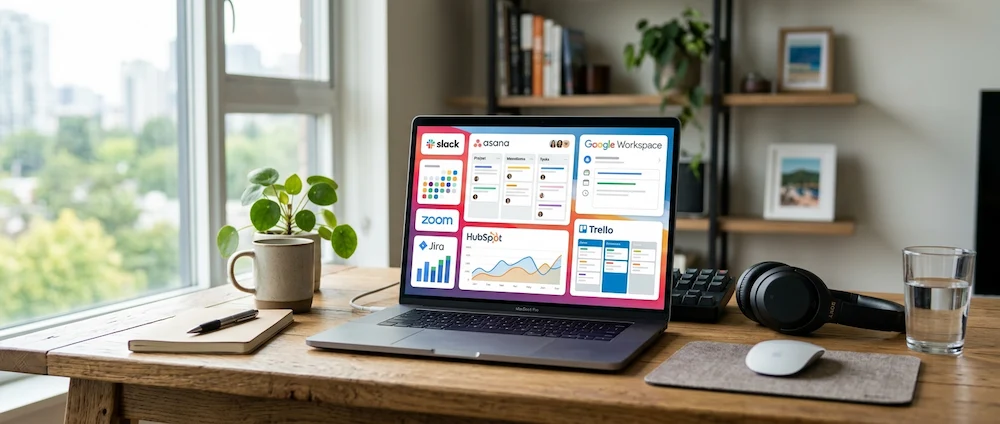
Managing a project requires method, clarity and coordination. You need to plan, allocate tasks, monitor deadlines and measure results. In this context, comparing digital project management tools becomes a strategic step.
You don't just choose software. You choose a working structure. Your tool influences communication, team performance and the quality of deliverables.
A comparison of digital project management tools will help you to understand the real differences between the solutions available. Behind the sometimes similar interfaces lie very different approaches to use.

Digital tools
Digital project management tools fall into several categories. You'll find collaborative platforms, planning software, solutions focused on the agile method or systems integrated into broader business suites.
According to research published by Project Management Institute, The use of structured tools significantly improves the success of projects. Organisations that adopt formalised methods and appropriate digital solutions are more likely to meet their deadlines and budgets.
Digital tools can be used to :
- Structuring tasks
- View progress
- Centralising documents
- Facilitating communication
- Measuring performance
Your choice must be consistent with the size of your team, your organisational culture and your objectives.
Why compare before you choose
A comparison of digital project management tools can help you avoid costly mistakes. Migrating from one software package to another can disrupt your organisation and motivate your teams.
You need to analyse several criteria. Ease of use. Flexibility. Possible integration with your other digital tools. Data security.
Management studies published by the Harvard Business Review show that resistance to change increases when tools are perceived as complex or unsuited to everyday practices.
Comparing does not mean looking for the most complete solution. You need to identify the one that really matches your operational needs.
The main categories of tools
To structure your comparison of digital project management tools, you can distinguish between several families.
Tools based on traditional planning
These solutions are based on Gantt charts, schedules and task dependencies. They are suitable for structured projects with clearly defined stages.
You get a precise view of deadlines and workloads. This type of tool is ideal for industrial projects, construction sites or highly standardised environments.
Agile method-oriented tools
These platforms favour Kanban boards, sprints and rapid collaboration. They are widely used by software development teams and start-ups.
Your team can see which tasks are in progress, which ones are coming up and which ones have been completed. Maximum flexibility.
According to the Standish Group's annual report, agile projects have a higher success rate in scalable environments.
Integrated collaborative suites
Some solutions combine project management, messaging, document storage and office tools.
You centralise all your information. This approach reduces dispersion and improves traceability.
Key assessment criteria
A comparison of digital project management tools must be based on objective criteria.
Ergonomics
If the interface is confusing, your team is wasting time. You need to test for fluidity, clarity and ease of use.
The user experience has a direct influence on adoption.
Collaboration
Modern project management is based on cooperation. Check out how easy it is to comment, share files and notify members.
High-performance digital tools reduce email exchanges and improve transparency.
Reporting and indicators
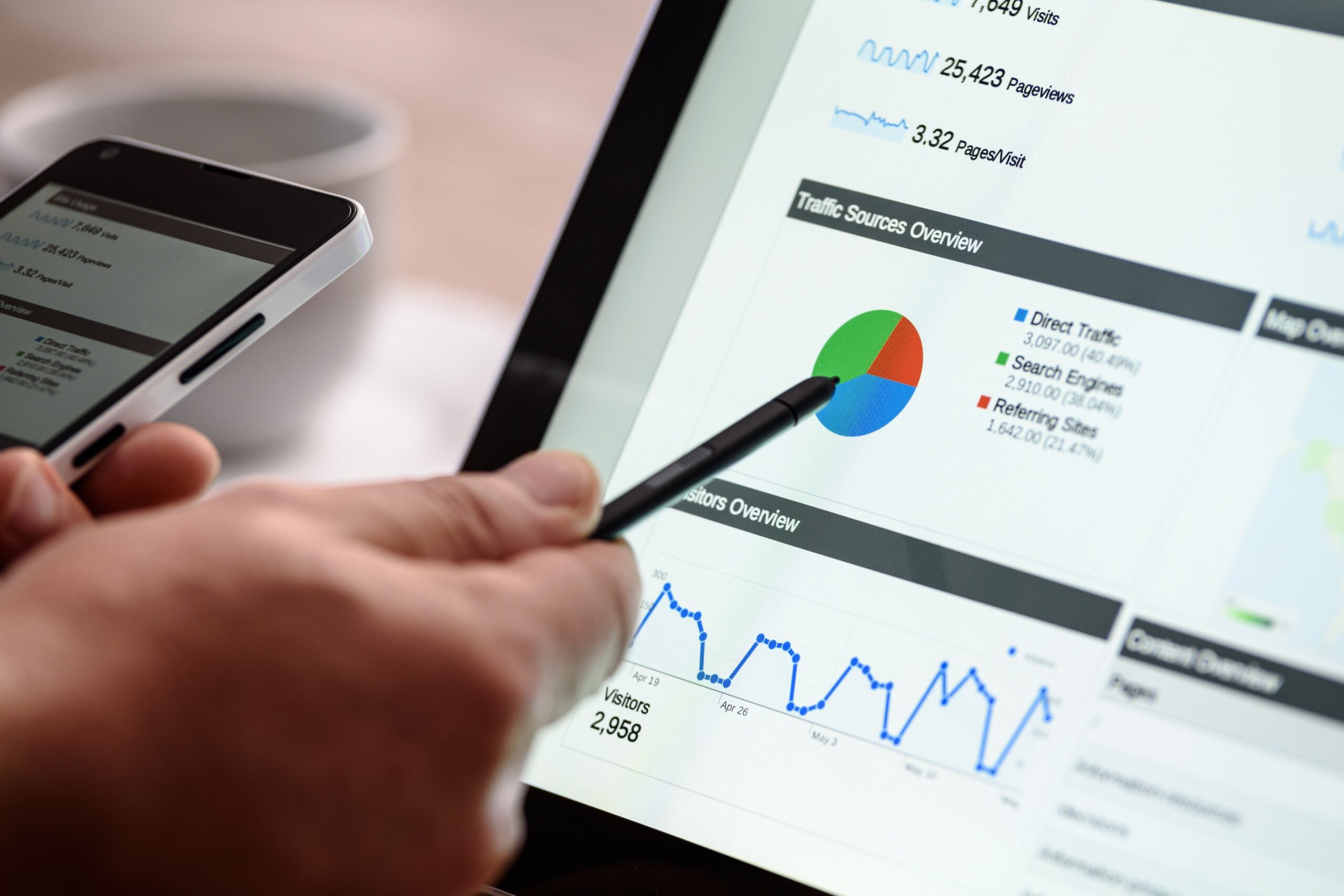
You need reliable data. Dashboards, performance indicators and automatic reports enable you to manage your business effectively.
Research by the Project Management Institute emphasises that regular monitoring of indicators improves risk management.
Data security
Protecting information is essential. Make sure the tool complies with security standards and offers regular back-ups.
You sometimes manage sensitive data. Technical reliability should never be overlooked.
Impact on team performance
Comparing digital project management tools also means analysing the human impact.
A well-chosen tool clarifies responsibilities. Each member knows what needs to be done and by when.
Organisational psychology shows that clear objectives reduce stress and improve commitment.
You create a more structured environment. Conflicts linked to misunderstandings are reduced.
Cost and return on investment
The price will vary according to the number of users and features. You need to assess the total cost over several years.
A comparison of digital project management tools must include the return on investment.
More expensive software can generate significant productivity gains. Fewer errors. Fewer delays. Fewer unnecessary meetings.
Economic analyses published by the McKinsey Global Institute show that digitising processes can increase productivity by 20 to 30 per cent in certain organisations.
Integration with your other digital tools
You need to check compatibility and automation options. Effective integration avoids double entry and reduces the risk of errors.
Your digital tools don't work in isolation. They need to be integrated with your messaging, accounting or IT systems. CRM.
Adapting to the size of your organisation
A small team does not have the same needs as a large group.
In an SME, simplicity comes first. In a large company, managing access rights and prioritising projects become priorities.
Your comparison of digital project management tools should therefore take account of your current structure and your growth prospects.
Common mistakes to avoid
Some organisations choose a tool purely for its popularity. Others focus on functionality without considering usability.
You need to avoid these pitfalls.
A Comparison Digital tools for effective project management are based on real tests, team feedback and strategic analysis.
Methodology for effective comparison
To structure your analysis, you can follow several steps:
- Identify your precise needs
- Define your priority criteria
- Testing several solutions
- Gathering feedback from users
- Assessing costs and scalability
This approach will enable you to turn your Comparatif des outils numériques de gestion de projet into a real decision-making tool.
Digital transformation and long-term vision
Project management is part of a wider dynamic of digital transformation.
Digital tools structure processes, promote transparency and improve coordination.
A comparison of digital project management tools must include this strategic dimension. You're not just choosing a tool for today. You're preparing your organisation for the future.
Conclusion
Choosing project management software is a key decision.
A comparison of digital project management tools helps you to analyse functionality, security, cost and human impact.
By drawing on solid references such as the Project Management Institute, the Harvard Business Review and the McKinsey Global Institute, you adopt a rigorous, documented approach.
Optimise your processes. You strengthen the cohesion of your team. Improve overall performance.
Comparing methodically gives you a clear vision. And that clarity makes all the difference to the success of your projects.