
In your opinion, what concrete uses of AI will really transform the experience of travellers over the next 3 to 5 years?
The most tangible impact of AI on the tourism experience will be marked by the disappearance of the difficulty of finding one's way through this mass of information, more scientifically known as cognitive friction. Today, more than 2 out of 3 travellers feel overwhelmed when they want to plan their trips. There are too many sites, too many applications, too many comparators, too much freedom. With an infinite number of possibilities, it becomes confusing, especially when you don't know exactly what you need or what you're looking for in terms of a tourist experience.
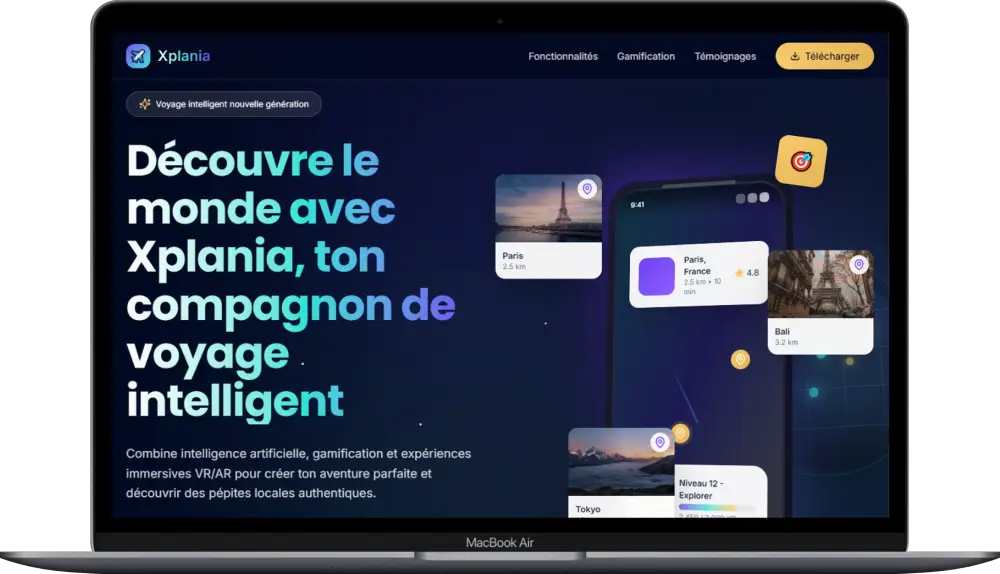
AI can transform this overload into clarity and ease of decision-making. It has great potential in the tourism and travel tech sectors, because it can simplify access to information tailored to individual needs. This is what I want to create with Xplania. Today's LLM models are still too generalist and know only the most popular places, which means they can't adapt to all the needs of the population.

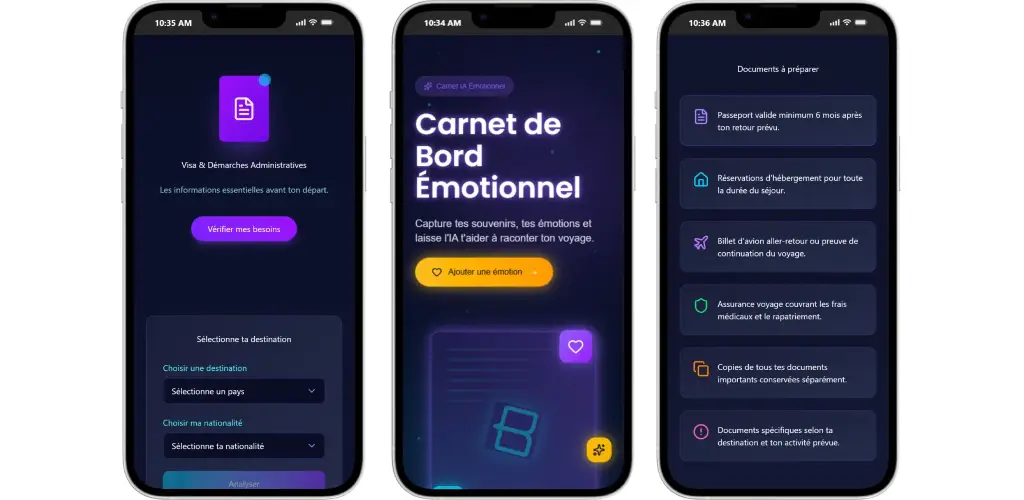
In the next 3 to 5 years, digital will continue to evolve strongly with the constant development of AI and the growing desire of travellers to discover the world after the confining periods associated with Covid. The most transformative impact will be the ability to use AI, powered by real and verified data from tourism bodies, to organise a personalised trip based on different factors, while being able to assist in real time. This includes upstream planning of trip details, administrative and material preparation, and then memorisation to keep track of this expedition.
Today, algorithms and generative AI recommend hotels, flights, activities or itineraries in a matter of seconds (ChatGPT, Claude, Gemini, etc.), but this often stops at helping you choose. AI helps to determine. Tomorrow, it will help people live.
It will no longer be limited to offering lists of accommodation or listed tourist activities. It will become a real travel companion, a virtual pocket guide in real time: generation of personalised 100 % itineraries in a matter of seconds, instant adaptation in the event of unforeseen circumstances (weather, crowds, cancellations, etc.), contextualised recommendations according to profile, budget, mood, needs, preferences and consumption patterns, continuous assistance before, during and after the trip on all aspects (planning, organisation, preparation, education, memorising the trip), etc.
With Xplania, AI will be used not just to plan, but to accompany the traveller from A to Z: preparing, living, remembering and recalling the experience. We will be moving from a planning tool to an intelligent companion, a virtual and dynamic travel guide. Travellers will see their mental workload and decision-making fatigue considerably reduced.
In this way, we will be moving away from general tourism, geared towards visiting as many standard places as possible, towards tourism that is tailor-made, lively, authentic, immersive and genuinely adapted to the needs of travellers.
And what about professionals? What are we doing for them?
For companies organising business trips, the impact will be strategic.
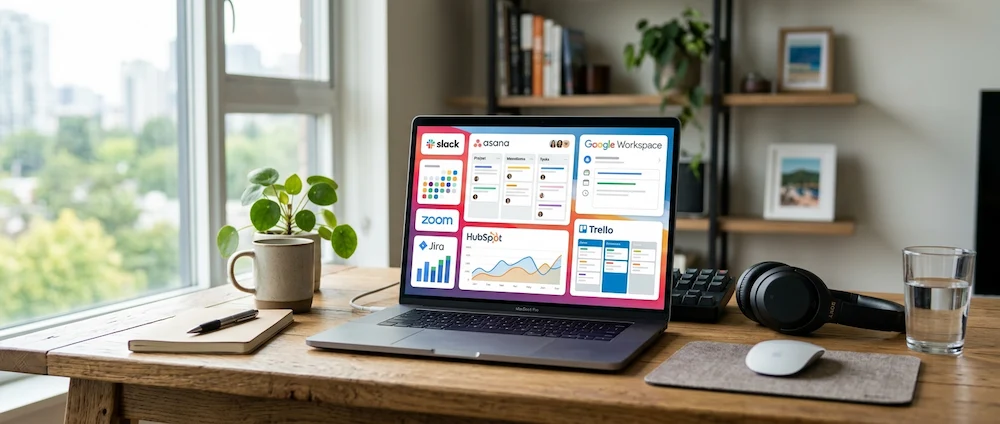
AI will make it possible to automatically optimise costs, comply with internal policies and integrate CSR criteria. We will be able to optimise routes according to various essential criteria, centralise costs and adjust dynamically in the event of unforeseen circumstances. This will improve productivity and save time.
For digital nomads, AI will become an indispensable tool, as these are individuals with hybrid needs: knowledge of the local environment, managing multiple administrative constraints, finding digital nomad-friendly locations. It could then analyse conditions in real time, anticipate constraints and make recommendations based on different fiscal and professional needs.
What will become of travel planners and travel agencies? Will they be replaced by AI?
AI is not going to replace them, but it is going to support them in the transition from a physical administrative organisation to a digital administration, which has been essential in our digitalised environment over the last few years. It will enable them to increase their productivity and improve their services: simulation of alternative scenarios in a matter of seconds, automation of repetitive tasks and predictive analyses.
Finally, these entities will be able to concentrate on the most important part, which is why travellers still choose them for their planning: creativity, high added-value advice and the human relationship, the need for connection, which an AI will never be able to replace at 100%.
My project: Xplania
I'm currently developing Xplania, an intelligent travel application designed to reduce the mental burden of organising trips and support travellers before, during and after their stay. I'm also present on LinkedIn to discuss the future of tourism, a more immersive, authentic and personalised form of tourism, far removed from today's mass tourism.
To move forward in a structured way, I designed a no-code prototype on Figma, divided into two parts: a page presenting the concept and an interactive version presenting the main functionalities. The aim is to test the user experience, the logic of the journey and the relevance of the uses before any technical development.
Today I'm launching a beta test phase to gather real, constructive feedback. I'm looking for curious travellers, digital nomads, tourism professionals or tech profiles interested in travel tech to explore the prototype and share their impressions with me.
This feedback is essential for fine-tuning the features, validating the value proposition and structuring the next stage: surrounding myself with an interested developer to build the technical version, particularly with a view to entrepreneurial competitions like Pépite.
Xplania is still in the co-construction phase, and every piece of feedback counts.
Links
Concept presentation page : website design
Full beta test : app design
“AI will not replace humans. It will become his travel co-pilot.”
Juliette Noel, founder of Xplania






I liked the fact that she talked about the time we spend looking for information for a trip. I totally agree with the idea that everything is scattered and that it ends up being more tiring than enjoyable.
The clarification that AI is not there to replace a human advisor but to help with repetitive aspects is an important point 😉
We agree on that @david
As a traveller who is often overwhelmed by the mass of information out there, the idea of an AI powered by real data from tourism organisations really appeals to me.