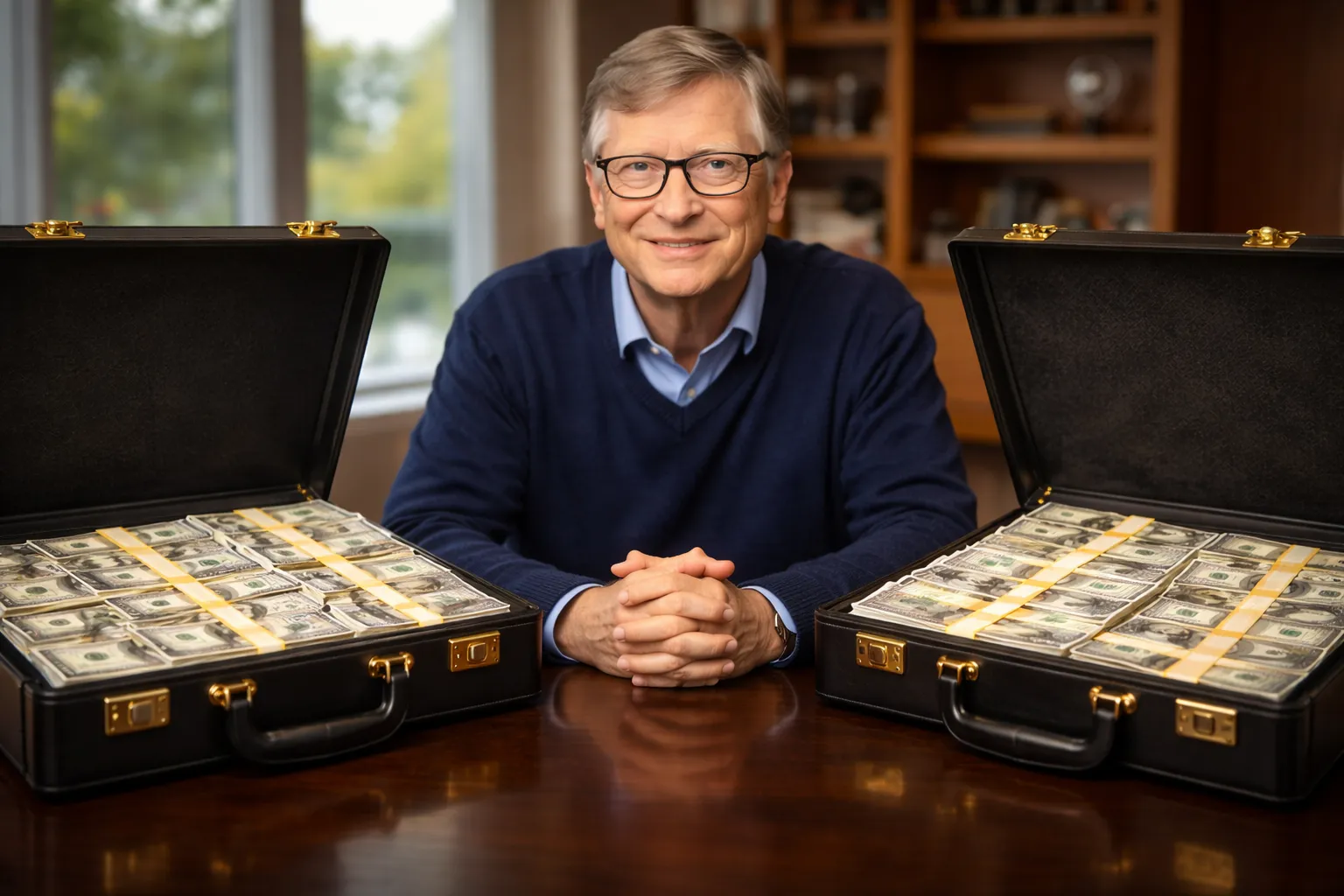
Bill Gates has announced a plan that is unprecedented in world philanthropic history. The Microsoft co-founder plans to donate more than 200 billion dollars to its foundation by 2045, by considerably accelerating the redistribution of his personal wealth. This decision, announced in May 2025, marks a turning point in his long-term humanitarian commitment.
A clear objective: to accelerate the global impact
In an official statement, Gates said he wanted to redistribute virtually all its remaining wealth over the next twenty years through the Gates Foundation, one of the world's largest philanthropic organisations. The plan anticipates a 200 billion $ overrun between now and 2045, by combining the existing endowment with future personal donations.
This commitment far exceeds the amounts already donated. In the foundation's first 25 years, more than 100 billion $ were spent for health, education and development programmes.
Three priorities for the coming decades
The foundation has set out the guidelines for this financing plan:
- Reducing preventable deaths among mothers and children
- Eradicate or significantly reduce infectious diseases (polio, measles, malaria)
- Supporting millions of people out of poverty
These priorities are part of a series of concrete objectives aligned with the global development goals. They cover complex areas, from public health to access to education and equal opportunities in low- and middle-income countries.
An unprecedented timetable: closing the foundation in 2045
La Gates Foundation also announced its planned closure on 31 December 2045. This accelerated timetable is a revision of the original plan, which was to extend the foundation's activities several decades after Gates' death. The aim is to concentrate efforts and resources on visible results over the next twenty years rather than maintaining an active structure over the long term.
More than just a donation: an active strategy
Bill Gates explained that withholding resources while many humanitarian challenges persist was undesirable. He said he would prefer to accelerate donations rather than retain a significant proportion of personal wealth. This conviction is part of a pragmatic vision of philanthropic action, aimed at maximising the immediate impact of available resources.
The initiative is inspired by the Giving Pledge, campaign launched by Bill Gates and Warren Buffett in 2010 to encourage billionaires to donate a significant proportion of their wealth, often more than 50 % of their fortune.
Debates and reactions
The announcement attracted worldwide media attention, with supporters highlighting the unprecedented ambition of the project and critics questioning the increased reliance on private funds to finance public health programmes. Some observers note that the tight timetable is putting pressure on implementing partners, including international organisations and governments.
Already a significant global influence
La Gates Foundation is considered one of the world's largest private philanthropic organisations, with an endowment valued at tens of billions of dollars and a significant impact on vaccination campaigns, the fight against infectious diseases and educational initiatives.
Since its creation in 2000, the foundation has helped to save millions of lives by funding vaccines, malaria treatments and other medical innovations.
Towards a new era in philanthropy
By setting a target of more than 200 billion $ by 2045, Bill Gates is redefining not only his own legacy, but also the way in which large private fortunes can be mobilised for global humanitarian action. This strategy focuses on accelerating resources to where they are most urgently needed, rather than distributing them slowly over generations.