A showcase site is often used to present a company, its services and contact details. Yet many SMEs underestimate its commercial potential. A showcase site can be much more than just a business card: it's a lever for attracting, convincing and converting your visitors into customers.

1. Understanding the role of a showcase site
A showcase website must be designed as a direct extension of your sales force. It must reassure, inform and encourage action. If your pages are limited to a few descriptive lines, you're missing out on a real opportunity for growth.
The aim is not to add complex functionalities, but to design a clear and fluid path. Right from the home page, visitors need to understand what you offer and why they should trust you.
2. Clarify your value proposition
To transform your showcase website at business toolStart by reviewing your main message.
Ask yourself: what am I really selling? What makes me different? Why would a customer choose my company over another?
Your value proposition should appear straight away on the first screen. Add a simple, direct, benefit-oriented catchphrase. For example:
"Save time with a fast, reliable service". or "Digital solutions designed for small businesses.
3. Structuring content to guide visitors
A showcase website An effective website doesn't just exist. It must guide the user to an action: contact, request a quote or make an appointment.
Organise your pages in a logical funnel:
- Clear presentation of your offer
- Highlighting tangible benefits
- Testimonials or social proof
- Visible calls to action
Each section should make you want to move on to the next stage. The more intuitive your route, the more your showcase website supports your sales approach.
4. Create a design that inspires confidence
Design has a strong influence on how your company is perceived. A showcase website unkempt or dated gives an unprofessional image.
Good design isn't just about looking good. It must also make information easy to read and organise in a hierarchical fashion.
Use colours that are consistent with your visual identity, legible typography and authentic images. Every detail contributes to the credibility of your brand.
5. Optimising calls to action
A business tool is based on well-placed calls to action. The "Contact us" button is not enough. Vary your wording according to the context:
- "Get a quote
- "Book a call
- "Free trial
Position these elements strategically: above the waterline, at the bottom of the pages and after the key arguments. The aim is to minimise the friction that prevents a prospect from taking action.
6. Focus on referencing and performance
Your showcase website must be visible to generate traffic. Without natural referencing (SEO), even the best design will remain invisible.
Work on your title tags, text and images to target the right keywords for your business.
Loading speed also plays a decisive role. A slow site will drive visitors away even before they discover what you have to offer. Check the technical performance and correct any blocking points: image weight, unnecessary scripts, unsuitable hosting.
7. Integrate social proof
Customer testimonials, case studies and partner logos add credibility. These elements transform a showcase website into a credible commercial showcase.
Highlight concrete successes: figures, measurable results, positive feedback. This social proof reassures and encourages conversion.
8. Monitor performance and make adjustments
A showcase website evolves with your company. To ensure that it remains a business tool You need to analyse visitor behaviour.
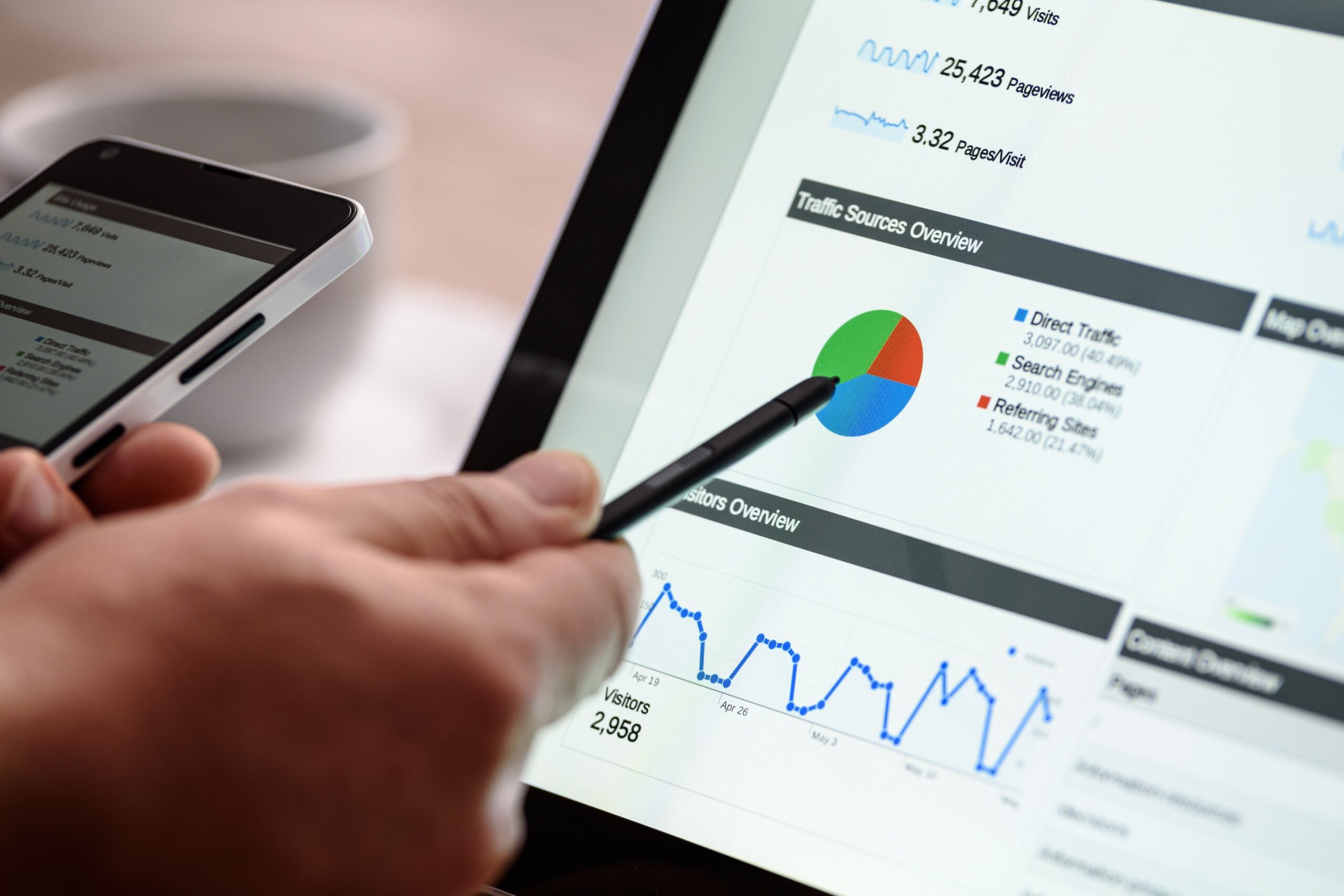
Install an analysis tool such as Google Analytics or Matomo. Measure the click-through rate, the time spent on each page and the number of forms sent. This data will help you identify areas for improvement.
The most effective sites are those that evolve regularly in response to feedback and results.
9. Automate and connect your tools
A showcase website can interact with your other systems: CRM, newsletter, chatbot or automated forms.
For example, each contact form can create a prospect record in your customer database.
These automated functions can transform a static site into a veritable business tool connected to your sales process.
10. The importance of the human element in conversion
Behind every click is a person looking for a solution. Your showcase website must therefore speak to people first and foremost.
Use a sincere tone, avoid technical jargon, and show that you understand your customers' real needs.
A text that is too institutional or impersonal reduces commitment. On the other hand, a clear and empathetic message reinforces proximity and fosters trust.
11. Make your site grow with your business
An SME evolves quickly. Your showcase website must reflect these changes: new offers, news, recent projects.
A static site gives the impression of an inactive company. Update it regularly to show your dynamism.
This can also have a positive impact on your SEO ranking, as search engines value recent, up-to-date content.
Conclusion
Transforming a showcase website at a real commercial tool requires a clear vision and rigorous execution.
It's not a question of a high budget, but of a coherent strategy. Every word, every image and every button must serve one purpose: to move your visitor towards a concrete action.
By adopting this approach, you will no longer see your site as a simple shop window, but as an active channel for business development, capable of attracting, convincing and retaining your customers.